Whatever position a brand holds, even the biggest fish in the pond can find themselves in unexplored waters. Large firms might appear to have it all together, but the truth is, they often need a helping hand to navigate the choppy seas of change. This is why consulting services are important —business consultants act as a compass guiding companies toward success.
Let’s uncover why large firms need consulting services and how the experts can help in be successful.
Why do Large Firms Need Consulting Services? (Even Smaller and Mid Ones!)
Whether you own a small or a large business, there are multiple benefits to hiring a consultant. It helps your business with the following advantages.
Explore the blog post to dive deep into the importance of consulting services.
Bringing in the Big Guns-Expertise and Specialized Knowledge
You know the saying, “You can’t be a jack of all trades and master of none”? Especially, large firms usually have talented teams, but even they can’t cover every base.
Consultants are like the big guns—specialists who come armed with deep knowledge and experience in areas where the company might be lacking.
These experts keep firms from falling into the usual traps, providing the simplest to success that only an industry veteran could draw up.
Fresh Eyes See the Best-Objective Analysis and Problem-Solving
Sometimes, being too close to the problem is the problem itself. When you’re knee-deep in daily operations, it’s easy to overlook noticeable issues. Consultants offer a fresh pair of eyes, analyzing the situation without any bias.
Imagine a large company facing a slump in sales. The internal team might be chasing their tails, unable to pinpoint the issue.
Here’s why consulting services are important, these experts step in like a detective, sifting through the evidence to find the root cause. This unbiased approach often leads to innovative solutions that are hiding in plain sight.
Steering the Ship-Change Management and Implementation Support
Making changes in a large organization is like steering a cruise ship—it takes time, effort, and a steady hand. Consultants are the expert captains, guiding firms through the rough waters of change management.
They plan the course, set sail, and ensure the crew is on board with the new direction.
Whether it’s adopting new software, restructuring departments, or shaking up company culture, they provide a steady hand.
They don’t just hand over a plan and walk away—they stick around to see the changes through, ensuring the ship reaches its destination smoothly. This is why, Consultants are needed.
Saving Pennies-Cost Savings and Efficiency Improvements
It’s a common misconception that consulting services are a money pit. In reality, they can be a goldmine for long-term savings.
The benefits of hiring a consultant are like financial detectives, sniffing out inefficiencies and hidden costs that the company might miss.
For Example; a firm’s supply chain is clogged with bottlenecks. A consulting firm swoops in, identifies the issues and streamlines the process.
The result? Reduced costs, faster delivery times, and happier customers. The initial investment in consulting services often pays for itself many times over.
Keeping Up with the Latest-Access to the Tools and Technologies
Not being aware of technological trends is no walk in the park. Large firms can quickly find themselves playing catch-up if they’re not careful.
Whether it’s using artificial intelligence, implementing data analytics, or executing cybersecurity best practices, the benefits of hiring a consultant are the tech-savvy partner for your firm’s needs. They ensure companies are well-versed with the right tools to thrive.
Staying in the Lead-Enhancing Competitive Advantage
In the business world, it’s survival of the fittest. You need every edge you can get to stay in the lead. This is why you need a consulting service to help sharpen your competitive advantage, whether it’s through market analysis, product differentiation, or customer experience improvements.
A consulting firm might help identify untapped market opportunities or develop a customer loyalty program that keeps clients coming back for more. These strategic moves can be the secret sauce that sets your company apart from its rivals.
Navigating the Minefield-Risk Management and Compliance
The road to success is often littered with regulatory and compliance hurdles. One wrong step, and a firm could find itself in hot water.
This is why consulting services are important as they act as guides through this minefield, helping you manage risks and stay on the right side of the law.
For example, they might assist a firm in navigating new regulations affecting its operations. By taking a proactive approach to risk management, consultants save companies from potential legal troubles and financial losses down the line.
Fueling the Fire-Boosting Innovation and Growth
Innovation doesn’t just happen—it needs to be nurtured. You can struggle to turn ideas into tangible results. specialists are the gardeners who help cultivate a culture of innovation, providing the framework and processes needed to bring ideas to life.
For instance, consultants might lead brainstorming sessions, develop prototypes, and facilitate market testing.
By drawing on the consultant’s expertise, a company can turn bright ideas into groundbreaking products faster.
One Size Does Not Fit All-Tailored Strategies for Unique Business Needs
No two firms are alike, and what works for one might not work for another. Experts understand this and offer bespoke solutions tailored to each company’s unique needs.
They take the time to understand the firm’s goals, challenges, and market dynamics, creating a strategy that’s a perfect fit.
Whether the company needs a marketing overhaul, operational fine-tuning, or leadership development, consulting services provide a custom-made approach that aligns with the firm’s vision.
Hire the best Consultant for your Company’s Success!
In the grand game of business, even the biggest players need a little help now and then. Above are the reasons why consulting services are important for businesses like yours.
If you’re a small or a large firm ready to break through barriers and achieve sustainable growth, look no further.
We offer top-notch consulting services designed to unlock your company’s full potential. With our expertise and tailored strategies, we’ll help you navigate the path to success.
Let’s team up and make your firm the shining star of your industry!
Will Robinson was a busy professional struggling to find the right fitness app to fit his lifestyle. With his hectic schedule and overwhelming options in the app store, he felt frustrated and defeated. However being unknowledgeable about fitness app development, he was struggling to find the resources to learn how to build one.
So, if you are another Will Robinson and facing a similar issue, here you’ll find the perfect fitness solution.
If you’re here, you must know the fitness app market is booming, with users seeking personalized guidance and engaging experiences. But with so many options, how do you create a fitness app that stands out?
This guide will equip you with the knowledge to craft an app that gets users lacing up and logging in.
Why Develop a Fitness Mobile App?
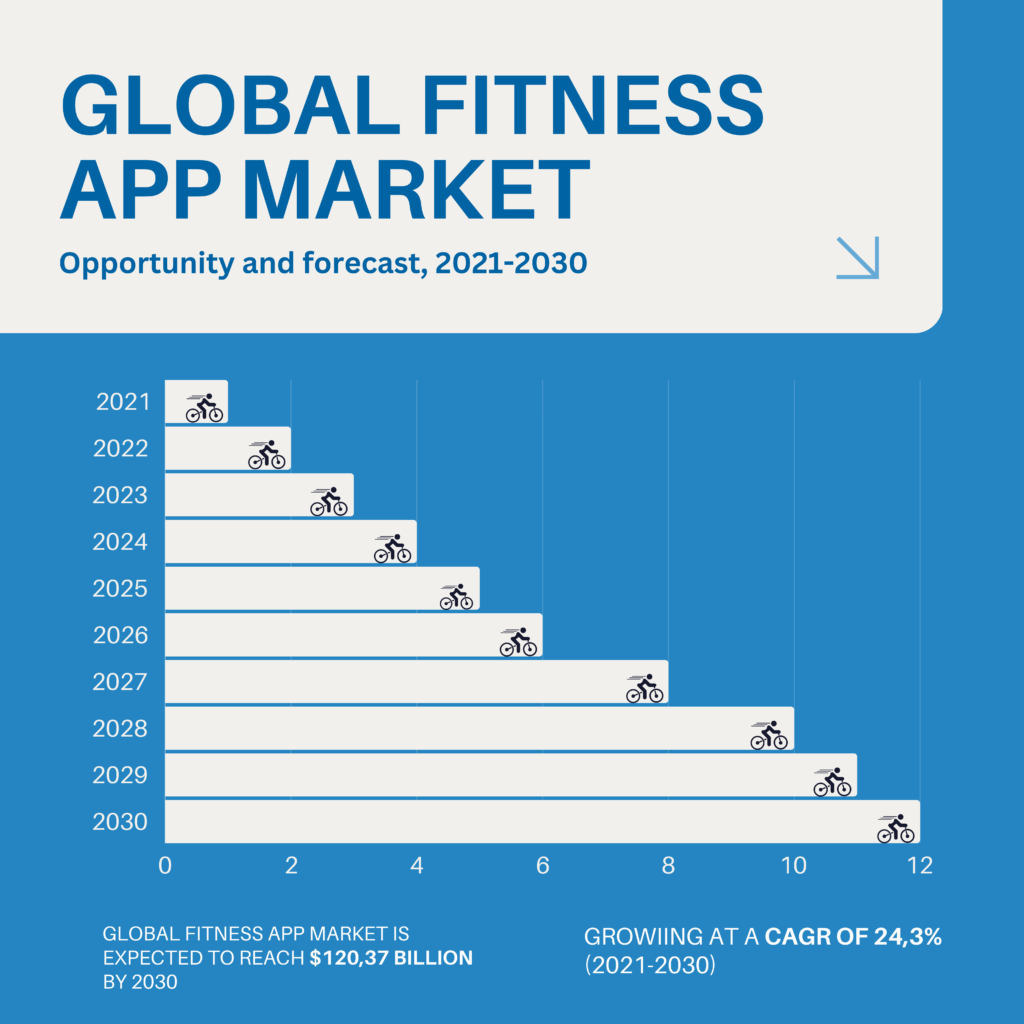
Recent studies by Gitnux show that the global fitness app market is projected to reach $14.7 billion by 2026, with a significant increase in user engagement and adoption rates.
Furthermore, the largest user group of fitness apps, comprising 41% of users, falls between the ages of 25 and 34. Also, approximately 56% of active users access their fitness mobile apps more than 10 times per week.
This trend indicates a lucrative opportunity for developers to tap into this market and create innovative solutions for fitness enthusiasts worldwide.
With demand soaring high, this is the perfect year for fitness app development and becoming a top app giant.
Here are the future trend statistics of fitness app development in the global market by Computools. Looking at the stats, it shows fitness applications will rise for many years to come.
The UsefulSteps for Health App Development that Soar
Before building an app doing in-depth research and planning is the foremost action. Here are some steps to follow before you start your mobile application…
Target a specific audience: People gravitate towards communities that understand their needs. Go beyond “general fitness” and target yoga enthusiasts, weightlifters, or those seeking pre/postnatal workouts.
Focus on a unique solution: Identify a common pain point and address it. For example; today individuals are suffering from
feeling stressed and overwhelmed with their busy schedule.
Lacking energy and feeling lethargic due to a lack of physical activity.
Struggling to achieve their fitness goals without a consistent workout routine.
For these pain points, you can offer gamified challenges and social features. Also, design High-Intensity Interval Training HIIT routines or quick mobility exercises.
Amazing Ideas to Unleash Engagement for Fitness Mobile App Development
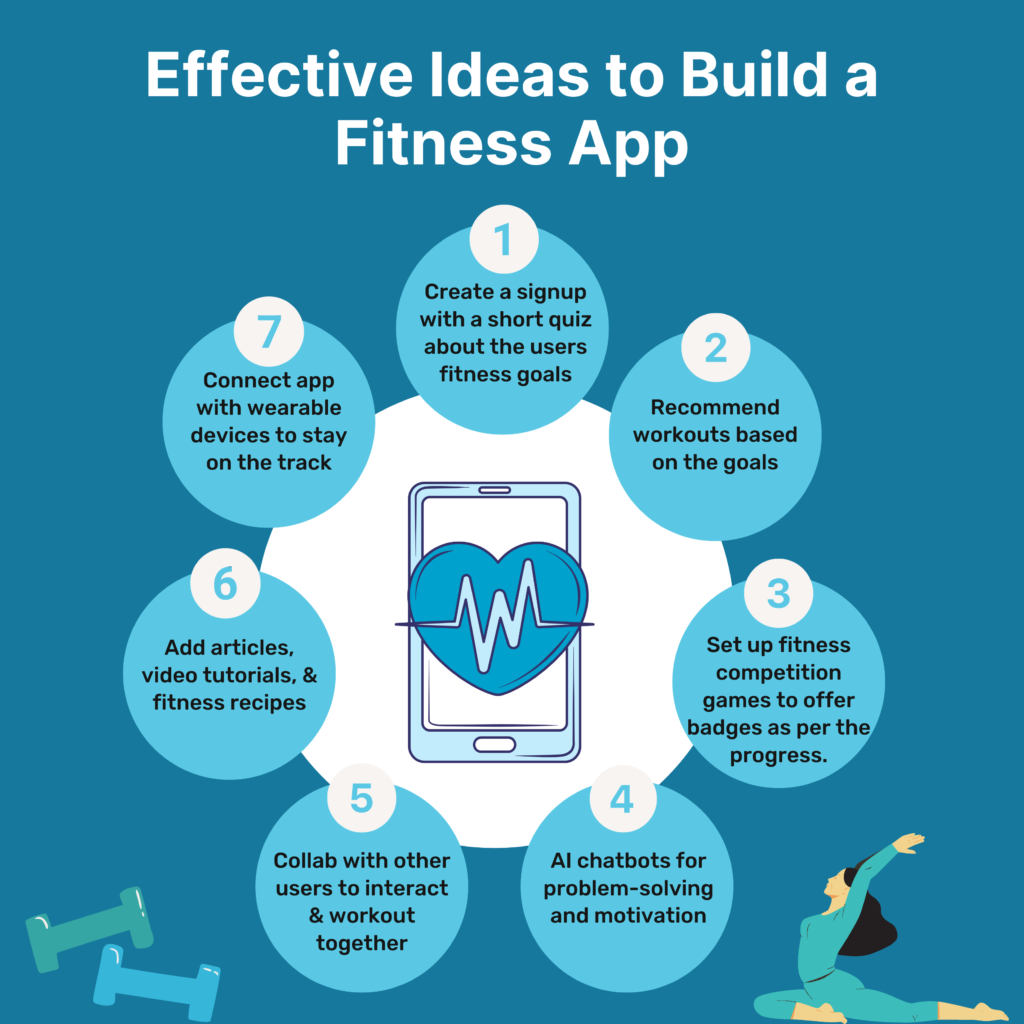
Here are some popular and effective ideas for starting your own fitness app development…
Onboarding that excites not frustrates: Make signup a breeze with social media logins and pre-populated goals based on a short quiz.
Personalized workouts that adapt: Craft algorithms that recommend exercises based on fitness level, progress, and goals.
Gamification that motivates: Incorporate badges, streaks, and leaderboards to turn workouts into a fun competition.
AI–powered coaching (Latest Trend): Integrate AI chatbots that answer questions, provide form corrections, and offer personalized encouragement.
Community that inspires: Foster a space for users to connect, share experiences, and find workout buddies.
Content library that educates: Offer articles, video tutorials, and healthy recipe inspiration to keep users informed and engaged.
Seamless wearable integration: According to experts at MarketsAndMarkets, the market for wearable health devices is projected to skyrocket to an impressive US$265.4 billion by 2026. Allow users to track progress via fitness trackers and smartwatches for a holistic view of their health.
Top Features for Fitness App Development
Exclusive features with useful traits are the best way to engage your customers. Here are some of the best features…
Wireframe and Prototype: Sketch out your app’s flow and test it with potential users to gather feedback before diving into development.
Tech Stack Selection: Choose the right programming languages and frameworks based on your app’s complexity and target platforms (iOS, Android, or both).
Development and Testing: Work with a skilled development team to bring your app to life. Rigorous testing ensures a smooth user experience.
Monetization: Consider a freemium model with premium features like personalized meal plans or exclusive workout programs. In-app purchases for workout gear or healthy recipe subscriptions are also options.
More In-demand Features to add on in your Application
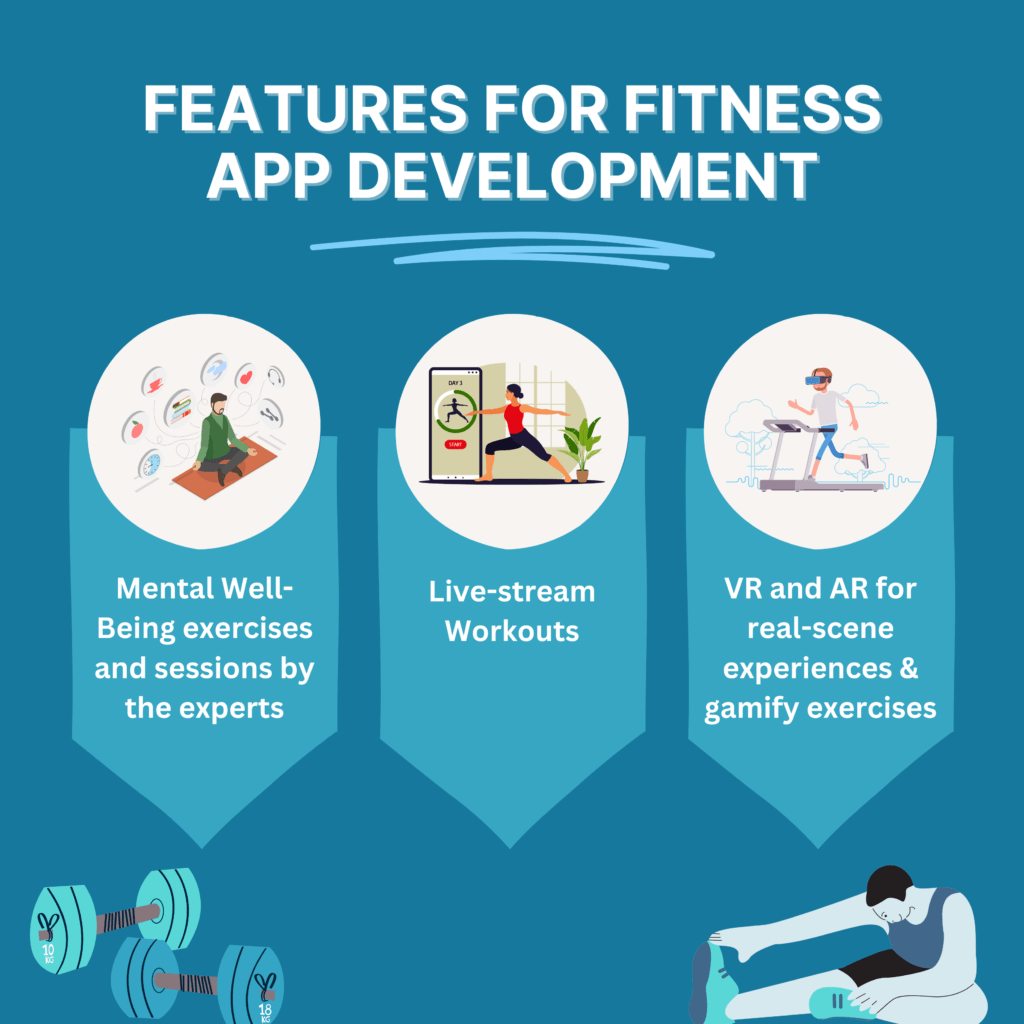
Remember, the fitness area is constantly evolving. Here are some of the latest trends to consider and make your app unique & popular:
Focus on mental well-being: Integrate mindfulness exercises, meditations, and sleep tracking to create a holistic approach to fitness.
Livestream workouts: Offer real-time, interactive classes led by certified trainers, fostering a sense of community and accountability.
Augmented Reality (AR) Workouts: Utilize AR to gamify exercises or provide real-time form feedback, making workouts more immersive and effective.
Winding Up!
A fitness app development that empowers users to take control of their health and wellness journey. Remember, the best apps prioritize user experience, provide value, and keep users excited to come back for more.
If you find yourself faced with the daunting task of building a fitness app alone, don’t worry. At The Expert Community, our team of expert app developers has helped countless customers craft niche apps tailored to their unique needs. We understand the complexity of fitness mobile app development and can guide you through the process to create the best app possible, one that users will love to use.
Let’s meet for a virtual coffee and discuss how our app development services have the potential to resolve your concerns with bug-free coding and smart work.
.We’re headed towards the new year i.e., 2025. And, without planning and prediction, businesses can lead to failure. So, AI in fashion is emerging very quickly & bringing shocking experiences for humankind. Meanwhile, many retail brands often try to bring innovations to the table.
However, to analyze what’s happening currently and what’s going to happen in the future, it’s crucial to stay up-to-date about the industry and avoid any downfall.
Also, it’s a generation of artificial intelligence, and we already know how AI is making human life easier and more productive. Right? So, we thought this time to have an insight into upcoming fashion trends with AI. Let’s have an overview.
AI in Fashion- What Artificial Intelligence Has Predicted?
Looking forward to the advantages and disadvantages of AI in fashion in 2025, we’ve evolved a lot to experience the personalized benefits. Here are a few most wonderful details about how fashion is evolving…
1. Sustainable and Eco-Friendly Fashion
As per the prediction of Artificial Intelligence in fashion, we found that people are moving towards sustainable fashion products that don’t disturb the ecosystem. This means people will start choosing environmentally friendly clothing brands.
Expect vintage and worn clothing to gain popularity, as well as more imaginative fabrics made from recycled materials such as plastic bottles and ocean garbage.
Companies will emphasize up-cycling, recycling, and extending the life of garments as the industry grows to properly comprehend the concept of circularity.
Moreover, minimalist aesthetics will experience a strong revival. Classic shapes, subtle colors, and clean lines will rule the runways.
But don’t let that fool you into thinking that bravery will be absent. Maximalism, in contrast to this ability for simplicity, will make a reappearance with bright designs.
2. Data-Driven Fashion Forecasting
The second jaw-dropping trend will be based on data-driven approaches. With the help of advanced analysis and machine learning, fashion companies can easily extract an unlimited amount of old and real-time data to predict upcoming fashion innovations with complete accuracy.
It’s a good news that you don’t have to rely on your second thoughts, third thoughts, doubts, and confusion about what can go wrong. AI in the fashion industry with machine learning algorithms will do the work for you.
It will work by delving deep into historical data and present data on fashion change, and then provide you with future predictions with accurate results.
You can easily identify secret patterns, emerging styles, consumer behavior, and preferences. It’s like having a crystal ball that reveals the hottest trends before they even hit the runways!
3. Personalized Fashion Recommendations
Next, the magic truly happens. Imagine you’ve got a fashion recommender who can help you personalize your wardrobe with trending clothes, accessories, footwear, etc.
Not only this, brands with artificial intelligence in the fashion industry will craft your unique style, personal preferences, and body type with the powerful impact of machine learning.
Welcome to AI advancements and deep learning; it’s all possible. It will be so easy and accurate to analyze outfit choices, your favorite brands, and social media posts to predict your own taste in fashion.
Hence, you’ll be able to enjoy the personal recommendations that are going to turn heads and all jaws drop. In simple terms, having a personal stylist style your daily outgoing outfits that match the latest trends
4. Virtual Try-On Experiences
Okay! AI in fashion like advanced algorithms has turned this trend into a reality. So, exactly what do we face when buying something online? size issue, or whether the dress or jacket will look good on me or not? Right.
Here comes the solution: virtual try-on experiences. An individual can easily select their chosen outfit and upload the photo in the comfort of their home! AI does its work. You will be able to see yourself in your selected outfit.
Also, Google has introduced virtual try-ons with the help of Gen AI.
Thus, it reduces the risk of dissatisfaction with online purchases and opens the road to fully experiencing outstanding and seamless fashion trends.
5. Predictive Inventory Management
Last but not least, for inventory management, it will be easier for fashion brands to list their collection of products. With the help of AI algorithms, fashion companies can analyze past data, current trends, and external stuff like weather trends to check demand accuracy.
This trend not only prevents overstocking of the products but also ensures that popular items are readily available, keeping both retailers and customers satisfied.
Technologies Used in the Fashion Industry?
Fashion in an art form readily embraces new technologies to not only elevate aesthetics but also streamline processes and cater to the dynamic demands of the industry. Here’s a peek into some of the fascinating technologies transforming the fashion scene:
1. Artificial Intelligence (AI)
AI-powered Design: AI algorithms analyze vast data sets of fashion trends, customer preferences, and market demands to generate design concepts and even complete sketches, aiding designers in brainstorming and refining their ideas.
Virtual Try-on Technology: AI-powered virtual try-on platforms allow customers to virtually “wear” clothes, using their body scans or uploaded selfies, before making purchase decisions. This not only enhances the online shopping experience but also reduces returns and unsold inventory.
Personalized Recommendations: AI analyzes customer data and browsing behavior to recommend products and styles that are likely to appeal to them, leading to a more satisfying and efficient shopping experience.
2. 3D Printing and Digital Fabrication
Rapid Prototyping: 3D printing enables the creation of physical prototypes of garment designs quickly and accurately, accelerating the design and development process. This allows for faster iteration and refinement of designs before mass production.
Mass Customization: 3D printing and digital fabrication technologies allow for the creation of customized garments, catering to individual preferences and body shapes. This opens up exciting possibilities for made-to-order fashion and empowers customers to be active participants in the design process.
3. Robotics
Automated Sewing and Manufacturing: Robotic arms are increasingly being used in garment manufacturing to automate tasks such as cutting, sewing, and finishing, leading to increased efficiency and precision. This can potentially reduce labor costs and improve product quality.
Warehousing and Logistics: Robots are being deployed in warehouses to automate tasks such as sorting, packing, and shipping garments, streamlining the logistics process and improving order fulfillment speed.
4. Virtual Reality (VR) and Augmented Reality (AR)
VR Fashion Shows and Showrooms: VR provides immersive experiences for showcasing fashion collections, allowing brands to host virtual fashion shows and create interactive showrooms where customers can explore garments in a 3D environment.
AR-powered Styling and Shopping: AR apps allow customers to virtually try on clothes and accessories using their smartphones or tablets, overlaying digital garments onto their live images. This provides a fun and convenient way to experiment with different styles and make informed purchase decisions.
5. Innovative New Materials and Processes
Biofabrication: Develop sustainable and environmentally friendly fabrics using microorganisms or plant-based materials. AI can be used to optimize the biofabrication process, create new material properties, and scale up production for commercial viability.
Circular fashion: Design and develop garments that are easily disassembled, recycled, or upcycled. AI can help identify suitable materials, optimize recycling processes, and create closed-loop production systems that minimize waste.
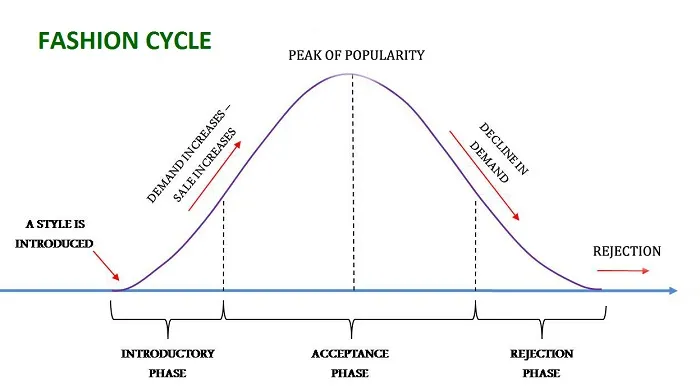
Aside from the topic, here’s a forecast of a fashion cycle: how do fashion retailers see highs and lows in their sales? When the demand for a product increases, sales also increase, and at that moment, the brand is touching the sky.
When the product gets rejected due to its low quality, high price, or style, it goes straight down.
Image Source: Digital Fashion Agency
Examples of Fashion Brands using Artificial Intelligence
Let’s dive into some real-world examples of how AI is revolutionizing the fashion industry across different stages:
Design and Development
Tommy Hilfiger: Leverages AI for design inspiration, analyzing social media trends and customer preferences to generate mood boards and suggest styles.
Nike: Employs AI to optimize shoe design for performance and comfort, using simulations to test different materials and geometries before production.
Material Ink: Develops custom, AI-designed textiles with unique functional properties like temperature regulation or self-cleaning capabilities.
Production and Manufacturing
Adidas: Uses AI to automate shoe customization, allowing customers to design their own sneakers and receive them within 24 hours.
Levi’s: Implements AI-powered robots for denim finishing, achieving greater consistency and efficiency than traditional hand-finishing methods.
Fashion for Good: Partners with startups like Unspun to utilize AI in fabric recycling, transforming textile waste into new, high-quality yarns for garment production.
Retail and Customer Experience
H&M: Offers a virtual try-on app powered by AI, allowing customers to see how clothes look on them before visiting a store.
Net-a-Porter: Employs AI-powered personal shopping bots that learn customer preferences and recommend clothing, accessories, and even entire outfits based on their taste.
Stitch Fix: Uses AI to personalize online clothing subscription boxes, sending curated selections based on each customer’s style and fit preferences.
Sustainability and Transparency
BoF Sustainability Index: Utilizes AI to track and rank the sustainability performance of fashion brands, providing transparency for consumers and promoting ethical practices.
Madewell: Implements AI to monitor its supply chain and identify potential environmental and social risks, ensuring responsible sourcing and production.
Re:Source: Develops an AI-driven platform that connects brands with excess materials and waste, facilitating reuse and reducing textile landfills.
Limitations and Disadvantages of AI in Fashion Evolution
Although AI is a potential new tool for anticipating fashion trends, there may be downsides and disadvantages of AI in fashion.
One issue is data bias, which occurs when the data used to train AI systems is not diverse enough and represents preexisting preconceptions in the fashion industry.
To solve this issue, AI in the fashion industry should be trained on a range of inclusive data sets & keep up-to-date algorithms as well.
Furthermore, because AI can only discern existing patterns and trends and cannot create entirely new ones, human creativity and intuition are still essential in the design process.
What is the Future of AI in Fashion Industry?
AI Predicted the amazing fashion trends of 2024–2030 Many cultures and ages will be blended with maximalist and minimalist designs, resulting in a magnificent fusion of traditional and modern elements.
Expect to see startling fusions of Western and Eastern ideas, as well as a comeback of 1960s, 1970s, and 1980s vintage trends. The runway will be transformed into a vibrant fabric that honors ethnic history and encourages individuality.
However, it has already started, and it is to be said that we have also seen fashion repeat.
Also, where boundaries and rules do not affect fashion, It’s a universe where self-expression is unrestricted and creativity rules king. Fashion becomes a storytelling medium through which people may express their own identities and points of view.
Clothing with seamless technology integration may evolve in response to our ever-changing expectations and opinions. As fabrics come to life with vibrant colors, patterns, and textures, our garments become living masterpieces.
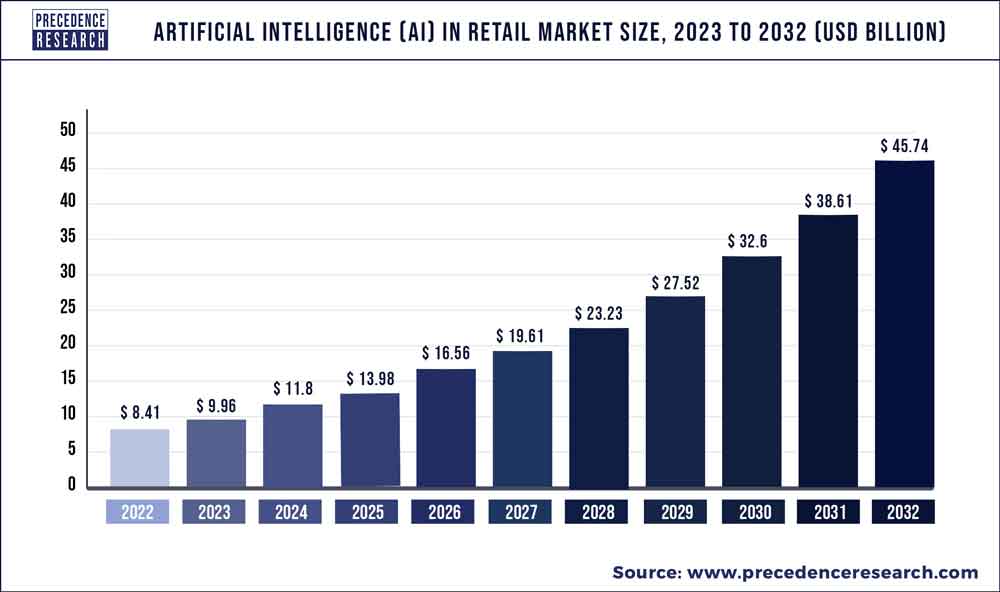
A Tractica analysis projects that the market for wearable AI apps will reach $10 billion by 2025.
AI is the secret weapon that not only helps predict trends but also ensures that enthusiasts and businesses stay ahead of the curve. AI in fashion is transforming the industry in unexpected ways in 2025 and in coming years.
Embracing this technological revolution is not just a choice but a necessity for those who aim to lead artificial intelligence in fashion industry into a more stylish and sustainable future.
So, whether you’re a fashion business owner or a trend follower, let AI be your guide. Therefore, if you need an AI solution for your fashion brand, our expert team has your back.
If you are a business owner and thinks being stagnant can help you profit from years to years, then you are wrong. Staying ahead requires expertise, insight, and strategic planning. But how? This is where a business consultant can make a significant difference. But the question arises, “How to hire a business consultant?” and ensure that they align with your company’s goals and values.
In this comprehensive guide, we’ll explore the steps and considerations involved in hiring a business consultant.
The Importance of Hiring a Business Consultant
Visualize this: You’re steering a ship through unpredictable waters. While you have the skills to navigate, An expert navigator can provide the insights and strategies needed to avoid potential pitfalls and seize opportunities.
Similarly, a business consultant brings specialized knowledge and an outsider’s perspective, which can be invaluable for solving problems, optimizing processes, and achieving growth.
Easy and Effective Steps to Hire a Business Consultant
To hire a business consultant online or nearby your area, you need a proper strategic planning. To help you lessen your work load, here are the following steps to follow…
Step 1: Identify Your Business Needs
Keep in mind, before you hire a business consultant, it’s crucial to understand what you’re looking for. Are you seeking help with financial management, marketing strategies, or operational efficiency?
For example, a small tech startup might need guidance on scaling operations, while a well-established retail chain could be looking for ways to modernize its marketing approach.
Key Considerations:
Specific Goals: Clearly define what you want to achieve with the consultant’s help.
Scope of Work: Determine the areas where you need assistance, such as strategic planning, market analysis, or financial restructuring.
Step 2: Research and Shortlist Potential Consultants
Now that you’ve identified your needs, it’s time to find the business consultant. Start by researching and shortlisting potential candidates. Look for consultants with a proven track record in your industry and a strong reputation for delivering results.
How to Find Consultants:
Online Platforms: Websites like LinkedIn, Clutch, and Upwork can be excellent resources for finding qualified consultants.
Professional Networks: Ask for recommendations from industry peers or attend networking events and conferences.
Consulting Firms: Consider reputable consulting firms that specialize in your area of need.
At The Expert Community, we offer a top-notch business consulting solution and have helped countless clients with our strategic solution.
Step 3: Evaluate Qualifications and Experience
Once you have a list of potential consultants, it’s essential to evaluate their qualifications and experience. Look for certifications, past client reviews, and case studies that demonstrate their expertise.
Key Factors to Consider:
Relevant Experience: Ensure the consultant has experience in your industry and with similar projects..
Case Studies and Testimonials: Review case studies and testimonials to understand the consultant’s approach and success rate.
Interviewing potential consultants is a critical step in the hiring process. It allows you to gauge their communication skills, approach to problem-solving, and cultural fit with your company.
Interview Tips:
Prepare Questions: Ask about their methodology, previous projects, and how they handle challenges.
Assess Communication Skills: A good consultant should be able to communicate complex ideas clearly and effectively.
Cultural Fit: Consider whether the consultant’s values and work style align with your company’s culture.
Step 5: Discuss the Proposal and Fees
After narrowing down your choices, request a detailed proposal from each consultant. This should outline the scope of work, timeline, deliverables, and fees. Be sure to discuss and negotiate the terms to ensure they align with your budget and expectations.
Key Elements of a Proposal:
Scope of Work: Clearly defined tasks and responsibilities.
Timeline: Estimated time frame for project completion.
Deliverables: Specific outcomes and reports you can expect.
Fees: Transparent breakdown of costs, including any additional expenses.
Step 6: Make Your Decision
With all the information at hand, it’s time to make your decision. Consider all aspects, from the consultant’s expertise and communication skills to their proposed approach and fees. Remember, the goal is to find a business consultant who not only meets your needs but also adds value to your business.
Hiring the right business consultant can lead to transformative results. For instance, a consultant might help a struggling retail business optimize its supply chain, resulting in cost savings and improved customer satisfaction. Alternatively, they could assist a tech startup in securing funding by refining its business plan and investor pitch.
End Note!
Hiring a business consultant requires careful consideration and a strategic approach. By following these steps-you can find the perfect match who will help your business thrive.
Ready to find your perfect match? Start your journey today by connecting with one of the leading consulting firm. Let’s collab together and bring success to your doorstep.
Hey there, fellow business owners! This success story is about one of our struggling clients who was suffering from a bad customer service experience. The client café wanted a permanent solution for this problem; they reached out to us.
We at The Expert Community worked our magic for the café, transforming their customer service experience with the power of an AI chatbot, which turned into a game-changer!
The Challenge
The Café, a busy hotspot in downtown Canada, struggled to keep up with its growing customer base. With lines out the door and phones ringing off the hook, their team was overwhelmed. They needed a solution that was as friendly and efficient as their baristas.
Our Solution
We whipped up an AI chatbot, a digital barista with a feature for customer service. The chatbot was designed to handle various tasks, from answering FAQs to taking orders and even offering personalized coffee recommendations. An AI chatbot has numerous benefits for a business to thrive and look after the opportunities, here’s how we did it:
Understanding the Grind: We sat with the café team to get the scoop on their needs. We wanted to know everything from their busiest hours to the most common customer queries.
Brewing the Perfect Bot: Using AI, we programmed a chatbot to understand and respond to customer inquiries in a friendly, conversational manner. It was like chatting with your best friend, but this friend knows all about coffee!
Training Time: We taught the bot everything there is to know about the café. From menu items to special promotions, Bot provided all the information under one roof.
Rolling Out the Beans: Once the AI chatbot was ready, we integrated it seamlessly into the café’s website and social media channels. Customers could now interact with the bot 24/7, even when the café was closed.
The Results
The impact was immediate and remarkable! Here’s a taste of the results:
Faster Response Times: Bot’s lightning-fast replies reduced wait times drastically. Customers loved the quick service, and the staff could focus on in-café interactions.
Increased Sales: By suggesting add-ons and upselling items, Bot boosted the café’s average order value. Who knew a chatbot could be such a sales star?
Happier Customers: With the AI chatbot handling the digital side of things, the café received rave reviews for their improved service. Customers appreciated the personalized touch and 24/7 availability.
Final Thought!
Ready to brew up some success for your own business? The Expert Community has got your back. Whether you’re in hospitality, retail, or any other industry, our AI services can transform your customer service experience. Don’t just take our word for it—let’s brew some success together with artificial intelligence.
Contact us today and let’s chat about how we can bring your customer service to the next level!
We use cookies on our website to give you the most relevant experience by remembering your preferences and repeat visits. By clicking “Accept”, you consent to the use of ALL the cookies.
This website uses cookies to improve your experience while you navigate through the website. Out of these, the cookies that are categorized as necessary are stored on your browser as they are essential for the working of basic functionalities of the website. We also use third-party cookies that help us analyze and understand how you use this website. These cookies will be stored in your browser only with your consent. You also have the option to opt-out of these cookies. But opting out of some of these cookies may affect your browsing experience.
Necessary cookies are absolutely essential for the website to function properly. These cookies ensure basic functionalities and security features of the website, anonymously.
Cookie
Duration
Description
cookielawinfo-checbox-analytics
11 months
This cookie is set by GDPR Cookie Consent plugin. The cookie is used to store the user consent for the cookies in the category "Analytics".
cookielawinfo-checbox-functional
11 months
The cookie is set by GDPR cookie consent to record the user consent for the cookies in the category "Functional".
cookielawinfo-checbox-others
11 months
This cookie is set by GDPR Cookie Consent plugin. The cookie is used to store the user consent for the cookies in the category "Other.
cookielawinfo-checkbox-necessary
11 months
This cookie is set by GDPR Cookie Consent plugin. The cookies is used to store the user consent for the cookies in the category "Necessary".
cookielawinfo-checkbox-performance
11 months
This cookie is set by GDPR Cookie Consent plugin. The cookie is used to store the user consent for the cookies in the category "Performance".
viewed_cookie_policy
11 months
The cookie is set by the GDPR Cookie Consent plugin and is used to store whether or not user has consented to the use of cookies. It does not store any personal data.
Functional cookies help to perform certain functionalities like sharing the content of the website on social media platforms, collect feedbacks, and other third-party features.
Performance cookies are used to understand and analyze the key performance indexes of the website which helps in delivering a better user experience for the visitors.
Analytical cookies are used to understand how visitors interact with the website. These cookies help provide information on metrics the number of visitors, bounce rate, traffic source, etc.
Advertisement cookies are used to provide visitors with relevant ads and marketing campaigns. These cookies track visitors across websites and collect information to provide customized ads.