Customer data is a goldmine. Businesses that prioritize customer data and protect then the businesses tend to receive their customers’ trust. According to the Zendesk customer experience report, 70% of customers refuse to buy services/products if the company cannot protect their data. So, for marketers, understanding and securing customer data is not just important—it’s essential. This guide will walk you through customer data protection and how you can keep your client’s trust by safeguarding their sensitive information.
What Is Customer Data Protection?
Customer data protectionrefers to safeguarding any personal information that a customer shares with your business. This includes names, contact details, payment information, and even their online behavior. Protecting this data from unauthorized access or breaches is crucial to maintaining customer trust and ensuring compliance with privacy laws.
Why Is Customer Data Protection Important?
Imagine a situation where someone breaks into your house and steals something valuable. That’s how customers feel when their data is mishandled. Protecting customer data ensures you maintain trust, avoid legal trouble, and keep your business thriving.
Why It Matters:
Trust: Customers expect their information to be safe when they share it with you. A data breach can ruin that trust.
Legal Compliance:Strict laws like GDPR mandate consumer data protection. Failure to comply can result in heavy fines.
Business Reputation: Data breaches harm your reputation. Think of companies that suffered massive hacks—they lost credibility overnight.
What Types of Customer Data Should You Protect?
Various types of customer data require protection, and understanding them is the first step toward safeguarding them.
Personal Identifiable Information (PII): This includes names, email addresses, phone numbers, and home addresses.
Payment Information: Credit card numbers, bank account details, and billing information.
Login Credentials: Usernames, passwords, and security question answers.
Behavioral Data: Information about how customers use your website, including their browsing habits, purchase history, and preferences.
Sensitive Personal Data: This includes health records, Social Security numbers, and any other data that could cause harm if misused.
How to Secure Customer Data: Best Practices
Securing customer data doesn’t have to be overwhelming. Here are easy-to-follow best practices you can adopt right now to secure user data effectively.
1. Use Strong Passwords and Multi-Factor Authentication (MFA)
This might seem simple, but weak passwords are one of the easiest ways for hackers to break in. Using complex passwords and implementing MFA adds an extra layer of security.
Example:Instead of using “password123,” consider a stronger one like “P@ssw0rd!456” and combine that with an authentication app or SMS code for extra protection.
2. Encrypt Data
Encryption turns data into a code that can only be read by someone who has the decryption key. This ensures that even if a hacker gets hold of your data, it’s useless to them without the key.
Example:Email providers often use encryption so that your emails are only readable by you and the person receiving them.
3. Update Software Regularly
Cybercriminals often exploit outdated software. Make sure your systems are always up-to-date to minimize risks.
4. Limit Access to Data
Not everyone in your organization needs access to all customer information. Limit access only to those who need it to do their job. This helps in securing customer data and reducing the chance of accidental exposure.
5. Create a Data Backup Plan
Always have a backup of your data in case of ransomware attacks or accidental deletion. Cloud-based backups are a popular option since they provide secure storage offsite.
6. Train Your Team
One of the most overlooked methods of protecting customer data is educating your team about the importance of consumer data protection. A small mistake, like clicking a phishing email, can expose sensitive information. Regular training on identifying threats is crucial.
Not protecting customer data can have severe consequences, including:
Financial Losses: Fines for failing to comply with data protection regulations can be steep. Additionally, the costs of resolving a data breach can add up quickly.
Loss of Customer Trust: Customers are unlikely to return to a business that has mishandled their data. Trust is difficult to regain once it’s lost.
Reputational Damage: A data breach can significantly damage your brand’s reputation, leading to lost revenue and reduced customer loyalty.
Legal Action: Data breaches can lead to lawsuits from affected customers, which could further damage your business.
Even with the best security measures, data breaches can happen. Here’s what you can do to minimize the damage:
1. Have a Response Plan Ready
Create a detailed data breach response plan that outlines what steps to take in case of a breach. This plan should include identifying the breach, containing it, and notifying affected customers and authorities.
2. Notify Customers Immediately
Transparency is key. If a breach occurs, inform your customers right away. Delaying this could worsen the damage and erode trust.
3. Offer Remedial Actions
Provide affected customers with remedial solutions like free credit monitoring or identity theft protection services to help them recover from the breach.
4. Review and Improve Security
After the breach, assess how it happened and take steps to improve your security measures to prevent future incidents.
Frequently Asked Questions (FAQs)
How Do I Protect Customer Data on My Website?
Use SSL certificates to encrypt data transfers.
Implement secure payment methods that comply with industry standards.
Require strong passwords and two-factor authentication for user accounts.
Ensure regular updates for all software and plug-ins to avoid vulnerabilities.
What Happens If My Business Fails to Protect Customer Data?
Fines: Many data protection laws impose heavy penalties for non-compliance.
Loss of Trust: Customers are less likely to return to a business that has been breached.
Reputation Damage: A breach can severely tarnish your brand’s image, costing you customers and revenue.
Legal Action: Customers may take legal action if their data is compromised, leading to lawsuits.
What Are the Key Legal Requirements for Data Protection?
Secure personal information with strong encryption and cybersecurity practices.
Be transparent with customers about how their data is collected, used, and stored.
Provide customers with control over their personal information, including the right to access or delete it.
What are the 3 customer data protection policies?
It is encryption, password, and email policies.
Give your Customer Data Protection Worries to us! We Got You Covered!
Nowadays, data breaches are becoming more common, customer data protection should be a top priority for every marketer. By following the best practices outlined in this guide, and staying up to date on security protocols—you can secure user data and keep your customer’s trust intact.
Feeling confused and fearful about your protecting customer data and where to start, We at The Expert Community provide end-to-end consumer data protection solutions for your business. Therefore, don’t wait until a breach happens—start protecting your customer data today to avoid costly fines, reputational damage, and lost trust.
At The Expert Community, we pride ourselves on helping businesses navigate the world of retail and e-commerce with expert consultants. Our client’s Fashion Store, a popular brick-and-mortar fashion retailer, approached us with a major challenge, something regarding in-store technology.
They were struggling to bridge the gap between their in-store and online shopping experiences. The goal? To create a seamless, engaging experience for both in-store shoppers and their growing e-commerce customer base.
They had an ace in the hole, a loyal customer base that loved shopping in-store but the online experience wasn’t living up to the hype. Customers shopping on the e-commerce site were finding the digital experience a bit… lacking, to say the least. Something had to change.
That’s when they called in the expert marketing consultants. That’s us!
The Challenge
The fashion store had already invested in an e-commerce platform, but customers reported it felt disconnected from the in-store experience they had grown to love. People loved visiting their shops in person because of the personal attention, easy navigation, and tactile feel of the clothes. Online, however, it was just a bland, transactional website.
They wanted to use in-store technology to bridge this gap, utilizing it to enhance customer engagement online and offline. But how? They were stumped, and so were we… until we rolled up our sleeves and put on our thinking caps.
Our Approach
After diving deep into their in-store setup and analyzing their e-commerce stats, we identified several key opportunities where the two experiences could intersect. We worked closely with our client’s fashion store’s leadership and tech team to create a plan of action that would knock customers’ socks off in-store and online.
Here’s what we did with online and in-store technology ideas:
1. Virtual Try-On Technology
Customers love trying on clothes. They love the feel, the fit, and the excitement of seeing themselves in a killer outfit. But online shoppers were missing out on this magic.
So, we introduced Virtual Try-On Technology on the website, which let users get a 3D feel of the clothes—just like in-store!
We even connected the virtual try-on feature to the in-store experience, so customers could “save” their favorites and then try them on for real when they visited the store.
2. In-Store Kiosks Linked to Online Accounts
In-store kiosks are nothing new, but we gave them a facelift. By linking in-store kiosks to customers’ online accounts, we allowed customers to browse products they may have seen online, check for stock availability, and even get personalized recommendations based on their online browsing history. It was like online shopping, but in person—how cool is that?
3. Personalized Offers Using Customer Data
We all love a good deal, don’t we? Using customer data from online purchases and store visits, we helped fashion stores set up personalized in-store offers that pop up on customers’ phones as soon as they enter the store. Imagine walking into your favorite shop and instantly getting a notification for 20% off that jacket you had been eyeing online. Game-changer, right?
5. Augmented Reality (AR) Store Navigation
Let’s face it—finding your way around a big store can be a headache. To solve that, we integrated an AR navigation featureon the client’s shop mobile app, allowing customers to find their way to specific products they had viewed online.
Customers could use their smartphones to guide themselves to the exact aisle and rack in-store. No more wandering, wondering where that shirt is hiding.
The Results
The results were like night and day. Once we integrated all these in-store technologies and connected them with the online experience, the fashion store saw a 45% increase in e-commerce sales and a 30% boost in in-store traffic. And that’s not even the best part—customer satisfaction ratings skyrocketed across both platforms.
But don’t just take our word for it; here’s a quick snapshot of the impact:
Average session duration on the website increased by 25%—customers loved playing with the virtual try-on feature.
Cart abandonment rates dropped by 20%- due to connected kiosks, customers were more likely to complete their purchases, whether in-store or online.
In-store visits from online shoppers rose by 40%—with personalized offers driving people into the physical store.
Wrapping it up!
At The Expert Community, we’re all about making retail dreams come true by merging cutting-edge in-store technology with good old-fashioned customer care. And the case of our client’s fashion store? It’s proof that in-store technology can transform the customer experience—not just in-store but online, too.
If you’re facing similar challenges in your business, hit us up! We’d love to help you cook up something special. Let’s make your online experiences as smooth as butter on toast!
In an age where digital interactions have become an integral part of our daily lives, businesses are presented with a unique opportunity to reach, engage, and connect with their target audiences through social media marketing. It’s not merely a trend but a transformative force that has reshaped the way companies operate and communicate.
In this blog post, we will explore the compelling reasons why businesses should opt for social media marketing.
Why is Social Media Marketing Important for Businesses?
According to Sprout social’s the 2023 state of social media report, every business of different industries’ top choice is building loyalty & brand reputation. An, how to build one? You can do it via social media platforms. Let’s understand the reason why it’s crucial for entrepreneur’s
Reach New Heights with Brand Visibility
Expand your brand awareness to a global audience. Social media platforms like Facebook, Instagram, Twitter, LinkedIn, and TikTok connect you with potential customers worldwide.
Build Lasting Relationships
Go beyond one-way communication. Social media allows you to chat directly with your customers, answer their questions, address concerns, and celebrate successes together. This fosters trust and loyalty.
Target the Right People
Forget scattershot marketing. Social media advertising lets you target your ideal customers with laser precision based on demographics, interests, and online behavior. Show your message to those most likely to convert into paying customers.
Become an Industry Leader
Share insightful content, educational materials, and participate in industry discussions. Social media platforms are your stage to showcase your expertise and establish yourself as a thought leader in your field.
Show Your Human Side
Don’t be a faceless corporation. Use social media to share the stories behind your brand, the amazing people in your team, and the values you stand for. People connect with realness!
Drive More Traffic to Your Website
Use your social media profiles as a gateway to your website. Share links to your blog posts, product pages, or special offers, and convert those website visitors into customers.
Understand Your Customers Better
Gain valuable insights into your audience’s preferences and behavior. Social media analytics help you see what content resonates with them, when they’re most active online, and what topics they care about. Use this data to tailor your marketing strategy for maximum impact.
Stay Ahead of the Competition
In today’s digital world, social media is a must-have. Your competitors are likely leveraging these platforms to reach your target audience. Be there too, and offer a superior online experience to win the edge.
Manage Crisis Situations Effectively
Social media can be a double-edged sword. But with a strategic approach, you can address issues promptly and transparently, minimizing damage to your reputation during a crisis.
Turn Customers into Fans
Social media fosters a sense of community. By engaging with your audience and making them feel valued, you’ll cultivate loyal customers who become brand advocates, spreading the word organically and growing your business.
Adapt to Changing Consumer Habits
Today’s consumers are on social media for everything – research, reviews, recommendations. Having a presence on these platforms ensures you’re aligned with how people search for products and services.
Measure Your Marketing Success
Social media marketing goes beyond just posting content. Track your campaigns, see what’s working and what’s not, and make data-driven decisions to continuously improve your strategy and maximize your return on investment (ROI).
Get Creative and Stand Out
Social media is your canvas! Experiment with various content formats like eye-catching visuals, engaging videos, and thought-provoking stories to grab attention and set your brand apart from the competition.
Fuel Innovation
Listen to your audience! Social media can be a goldmine for valuable customer feedback and suggestions. Use this input to inspire product or service improvements and show your customers you value their voice.
Tried and True Social Media Marketing Strategies to become Successful
Grab attention with high-quality photos, videos, and informative posts. Think of it like an engaging shop window!
Stay fresh in your audience’s mind by posting consistently. A steady stream keeps them coming back for more.
Don’t be afraid to experiment! Try polls, questions, contests, and live videos to keep things interesting.
Show you care! Respond to comments and messages – it builds connections and loyalty.
Partner with other businesses or influencers to reach new audiences and expand your reach.
Share your team, culture, and stories. Let your personality shine!
Feature user content and recognize loyal customers. Make them feel valued!
Connect with emotions. Share customer success and your brand’s purpose!
Boost your visibility with social media ads. Laser-focus on your ideal customer for maximum impact.
See what’s working and what’s not. Use social media insights to refine your strategy and keep winning!
Social Media Marketing Statistics
What percentage of consumers agree that social media enables them to interact with brands and companies? The answer is 68% of companies’ states that the social media platforms enable them to connect & interact with other brands and companies seamlessly
Moreover, 57% of consumers follow brands on social media to learn about new products or services.
Also, 90% of people buy from brands they follow on social media.
In Conclusion, don’t be left behind in the social media dust! The power of connection is in your hands. Engage with your audience, build relationships, and watch your brand soar.
Contact us today for a consultation and see how we can help you turn followers into fans (and fans into customers!).
The atmosphere is echoing that Liquid AI’s first series of Gen AI models is outperforming other LLMs.
Let’s have an overview of what’s special about this new generative AI innovation…
Liquid AI, an MIT Spin-off is a foundation model company, that proudly announces the launch of its latest AI models, known as “Liquid Foundation Models (LFMs),” that are set to redefine how generative AI operates.
The models are in three sizes and it’s a non-transformer model. Without using the current architecture these LFMs compete with other AI language models.
Furthermore, these models are specifically designed to compete with traditional large language models (LLMs) like GPT, Gemini, Gemma, and early benchmarks show that they may even outperform their older counterparts.
Source: Liquid AI (Different Innovations of Language Models)
What Makes These Generative AI Models Unique?
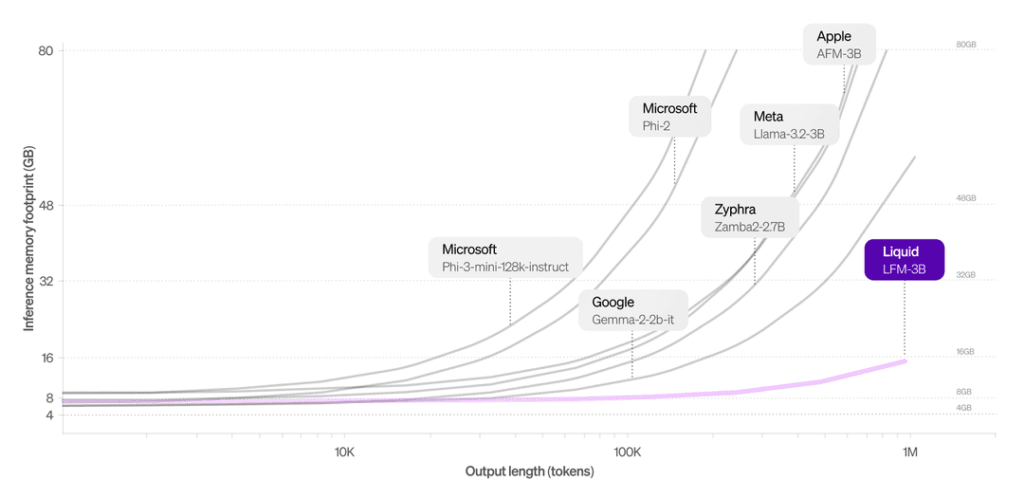
LLMs ability to process large amounts of text with fewer computational resources. For instance, the LFM-3B and LFM-40B models use fewer memory resources than larger models, allowing them to deliver the same or better performance.
This means that tasks like text summarization, chatbot conversations, and document processing can be done more efficiently using these new AI training models.
The innovative structure of these LFMs allows them to maintain context over long periods, which is a significant challenge in AI language models.
They excel at retaining information over extended conversations or long documents, making them suitable for real-world applications like customer service bots, mobile apps, and even edge computing devices.
What Language LFMs Excel At Today?
Language LFMs are proficient in delivering broad and specialized knowledge across various topics. They handle mathematical problems and logical reasoning with considerable accuracy.
Moreover, their efficiency shines in tasks involving long-context scenarios, allowing them to maintain coherence and relevance over extended pieces of text.
English is their primary language, but they also support multiple other languages, including Spanish, French, German, Chinese, Arabic, Japanese, and Korean, making them versatile for multilingual applications.
Current Limitations of Language LFMs
Despite their strengths, Language LFMs struggle with certain tasks. For instance, they are less effective in zero-shot coding challenges and can encounter issues when performing precise numerical calculations.
They also fall short when handling real-time, time-sensitive information and struggle with simple but specific tasks, such as counting letters in words.
Additionally, the application of human preference optimization techniques remains relatively limited, which could enhance the models’ ability to align better with human expectations and preferences.
What is the Future of Liquid Foundation Models?
Liquid AI’s LFMs also pave the way for future innovations, as the company aims to expand its use to other fields like video, audio, and time-series data.
This versatility highlights the growing impact of generative AI in various sectors, and the potential of these new AI models to shape future developments.
Bottom Line!
In summary, Liquid AI’s latest AI language model advancements, specifically with the introduction of LFMs, are poised to challenge industry leaders in the generative AI space. These AI models offer efficient, high-performance solutions across industries, making them a key player to watch in the evolution of AI training models.
Subscribe to our newsletter for the latest breakthroughs and exclusive insights into cutting-edge innovations.
A business can’t fly high if you don’t know about the performance metrics. Moreover, knowing how well your website is performing, understanding user behavior, and tracking marketing campaigns are essential to boosting your business performance. So, what’s the solution? It is possible with web analytics tools in digital marketing. These tools provide invaluable insights into what’s working, what needs improvement, and where to focus your efforts next.
Let’s explore the top analytics tools for marketers.
How can Analytics Tools Drive Business Growth?
According to a recent report by HubSpot, 76% of marketers say they make decisions based on data analytics, and companies that use analytics are 5 times more likely to make better business decisions.
When it comes to digital marketing, having data-driven insights is like having a map on a road trip. Without it, you’re driving blind. Analytics tools for digital marketing allow you to… track everything from website traffic to conversion rates, helping you make informed decisions. For example;
Want to know which campaigns are bringing in the most customers,
Which blog posts are getting the most attention, etc.
Therefore, these tools can give you the answers in real-time.
5 Best Web Analytics Tools in Digital Marketing
According to Forrester’s recent survey. businesses that use web analytics tools report a 19% increase in ROI compared to those that don’t.
Here’s a breakdown of the best analytics tools for marketers in 2025. Each tool offers unique features that can help you boost your business performance.
It’s impossible to talk about web analytics tools in digital marketing without mentioning Google Analytics. This free tool is the gold standard for tracking website performance. With Google Analytics, you can track:
Website traffic and user demographics
Bounce rates and average session durations
Conversion tracking for goals like form submissions and purchases
Google Analytics also integrates seamlessly with other Google tools like Google Ads, making it a must-have for any digital marketer. The platform is highly customizable, so you can set up specific dashboards and reports that match your business goals.
If you’re looking for a more robust tool that focuses on SEO and overall online visibility, SEMrush is your go-to solution. This tool offers detailed keyword tracking, competitor analysis, and even social media tracking. It includes:
SEO audits and on-page analysis
Backlink tracking and domain authority metrics
Traffic analytics for competitor websites
SEMrush is ideal for marketers who want to go beyond just website analytics and take a deeper dive into SEO strategy and competition analysis.
Pricing: Starts at $139.95/month for the Pro plan, $249.95/month for Guru, and $499.95/month.
Understanding your user behavior can make a difference in improving website performance. That’s where Hotjar shines. This tool provides heatmaps and session recordings to show you how visitors interact with your website. Hotjar’s features include:
Heatmaps showing where users click, scroll, and hover
Session recordings of user behavior
User feedback tools like surveys and polls
By identifying where users drop off or which elements attract attention, Hotjar helps you optimize the user experience and increase conversions.
Pricing: Starts at $0/month for the Basic plan, $32/month for Plus, $80/month for Business, and $171/month for Scale.
For those who want detailed customer journey tracking, Kissmetrics is one of the best analytics tools for marketers. This tool tracks individual user behavior across your website and email campaigns, allowing you to see how customers interact with your brand at different touchpoints. Key features include:
Funnel analysis to track where users drop off during the purchase process
Cohort analysis for tracking customer retention over time
Event tracking to monitor specific user actions like clicks, form fills, or downloads
Kissmetrics is perfect for eCommerce businesses looking to maximize conversion rates and improve customer lifetime value.
Pricing: Custom pricing based on your specific needs and usage
If your focus is mainly on SEO, Moz Pro is another powerful tool that can help you monitor rankings, analyze backlinks, and track keyword performance. Moz Pro offers:
SEO keyword research and analysis
On-page optimization recommendations
Rank tracking for specific keywords
This tool helps marketers stay on top of their SEO game, ensuring that their website ranks well on search engines while providing insights on how to improve their online presence.
Pricing: Starts at $99/month for the Standard plan and $179/month offering additional features and data volume.
How to Choose the Right Analytics Tool for Your Needs?
With the above-mentioned analytics tools examples, choosing the right one can be overwhelming. Here are some tips to help you pick the best tool:
Consider Your Business Size and Budget
Some tools, like Google Analytics, are free, while others like SEMrush and Kissmetrics come with a price tag. Evaluate your needs and budget before making a decision.
Evaluate Your Marketing Goals
If you’re primarily focused on SEO, Moz Pro or SEMrush may be the best fit. For improving user experience, Hotjar might be your tool of choice.
Ease of Integration
Ensure that the tool integrates seamlessly with other platforms you’re using, such as email marketing services or CRM systems.
Customer Support
Some tools come with extensive customer support, while others offer limited resources. Check the level of support available, especially if you’re new to analytics tools.
Q: What are the most commonly used web analytics tools in digital marketing?
A: The most commonly used tools include Google Analytics, SEMrush, Moz Pro, and Hotjar. These tools help track website performance, user behavior, and SEO metrics.
Q: Are there any free analytics tools for website performance?
A: Yes, Google Analytics is the most popular free tool for tracking website traffic and performance. It offers robust features that suit both beginners and advanced marketers.
Q: Can analytics tools improve my website’s SEO performance?
A: Absolutely! Tools like SEMrush and Moz Pro offer SEO audits, keyword research, and backlink analysis to help improve your search engine rankings.
It’s a Wrap!
At last, investing in the right web analytics tools in digital marketing can significantly impact your business performance. Whether you’re tracking website traffic, optimizing SEO, or understanding user behavior, these tools give you the insights needed to make smarter decisions.
If you’re ready to boost your digital marketing efforts and want to explore more about analytics tools for website performance, reach out to us today. We offer a range of solutions to help you choose the best tools to understand your business clearly!
We use cookies on our website to give you the most relevant experience by remembering your preferences and repeat visits. By clicking “Accept”, you consent to the use of ALL the cookies.
This website uses cookies to improve your experience while you navigate through the website. Out of these, the cookies that are categorized as necessary are stored on your browser as they are essential for the working of basic functionalities of the website. We also use third-party cookies that help us analyze and understand how you use this website. These cookies will be stored in your browser only with your consent. You also have the option to opt-out of these cookies. But opting out of some of these cookies may affect your browsing experience.
Necessary cookies are absolutely essential for the website to function properly. These cookies ensure basic functionalities and security features of the website, anonymously.
Cookie
Duration
Description
cookielawinfo-checbox-analytics
11 months
This cookie is set by GDPR Cookie Consent plugin. The cookie is used to store the user consent for the cookies in the category "Analytics".
cookielawinfo-checbox-functional
11 months
The cookie is set by GDPR cookie consent to record the user consent for the cookies in the category "Functional".
cookielawinfo-checbox-others
11 months
This cookie is set by GDPR Cookie Consent plugin. The cookie is used to store the user consent for the cookies in the category "Other.
cookielawinfo-checkbox-necessary
11 months
This cookie is set by GDPR Cookie Consent plugin. The cookies is used to store the user consent for the cookies in the category "Necessary".
cookielawinfo-checkbox-performance
11 months
This cookie is set by GDPR Cookie Consent plugin. The cookie is used to store the user consent for the cookies in the category "Performance".
viewed_cookie_policy
11 months
The cookie is set by the GDPR Cookie Consent plugin and is used to store whether or not user has consented to the use of cookies. It does not store any personal data.
Functional cookies help to perform certain functionalities like sharing the content of the website on social media platforms, collect feedbacks, and other third-party features.
Performance cookies are used to understand and analyze the key performance indexes of the website which helps in delivering a better user experience for the visitors.
Analytical cookies are used to understand how visitors interact with the website. These cookies help provide information on metrics the number of visitors, bounce rate, traffic source, etc.
Advertisement cookies are used to provide visitors with relevant ads and marketing campaigns. These cookies track visitors across websites and collect information to provide customized ads.