Have you ever landed on a website that made it difficult to find the content you were looking for? It’s because the site lacked a clear website structure for SEO. When the site doesn’t follow the rules of clear site structure design, then Google and even your target audience won’t understand what your webpage is about.
To help you understand and optimize the website structure for maximum SEO impact, we’ve curated this easy-to-learn comprehensive guide.
What is Website Structure for SEO Success?
Website structure is about how your website pages are organized and linked together. This helps users and search engines navigate your website seamlessly. In context, a well-structured website is not only good for the user experience but also a must-have for search engine optimization.
Here are the top 3 traits of a perfect SEO website structure:
Search engines can easily find and index all your pages.
Spreads authority throughout your web pages.
Helps users find the content they’re searching for.
Why is Website Structure Crucial for Boosting SEO?
Did you know that according to Backlinko’s recent study, nearly 40% of users abandon the website if they can’t find the information they need in just a few clicks?
If you want users and Google to love your site, there are 2 main reasons to prioritize the basic structure of the website.
Search Engine Optimization: A well-organized website is easier for search engines to crawl and understand, leading to higher rankings in search results. Search engines use website structure to determine what your site is about and which pages are most important.
By making it clear and logical, you’re giving search engines a roadmap to your best content.
User Experience: A well-structured website is easier for users to navigate. If users can find what they’re looking for quickly and easily, they’re more likely to stay on your site and come back again.
Meanwhile, a confusing website with a bad structure will frustrate users and lead them to leave. Thus, this can hurt your SEO badly.
Which is the Best Site Structure for SEO?
There are 4 types of SEO website structure to learn about and understand what structure is suitable for enhancing your website’s search engine optimization.
1. Hierarchical Structure
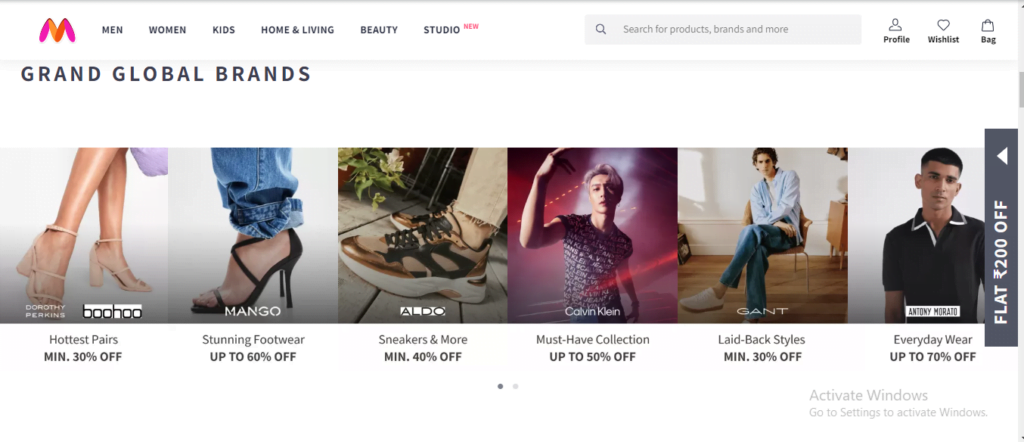
This is the most common and best site structure for SEO. It’s modeled like a pyramid, with the homepage at the top and subpages branching out. This structure is easy for users and search engines to navigate. Example: Myntra and Amazon.
2. Sequential Structure
Secondly, this structure is linear, like a book. Users progress through the website in a specific order, typically from start to finish. This structure is ideal for short websites with a clear beginning and end, such as tutorials or landing pages. Example: Codecademy and W3 Schools.
3. Matrix Structure
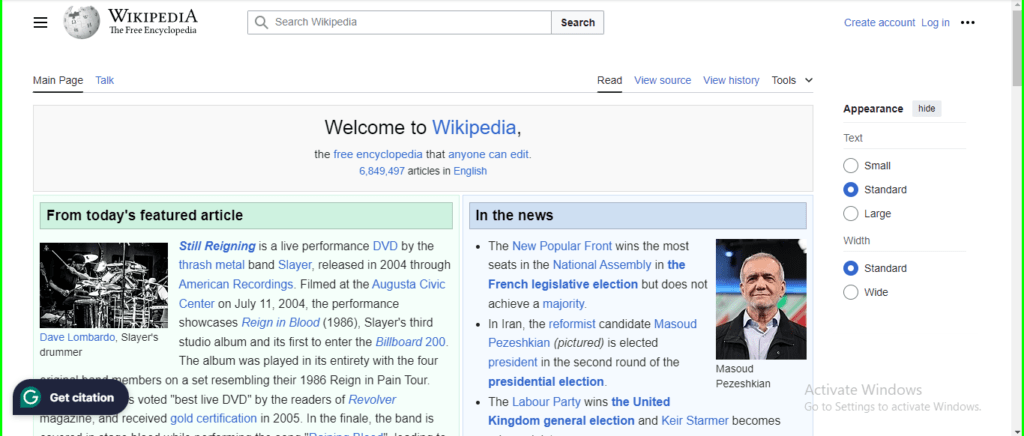
Next, this structure is like a web, with pages connected to each other in many different ways. This structure can be useful for complex websites with a lot of interconnected information, but it can also be confusing for users to navigate. Example: Wikipedia
4. Database Structure
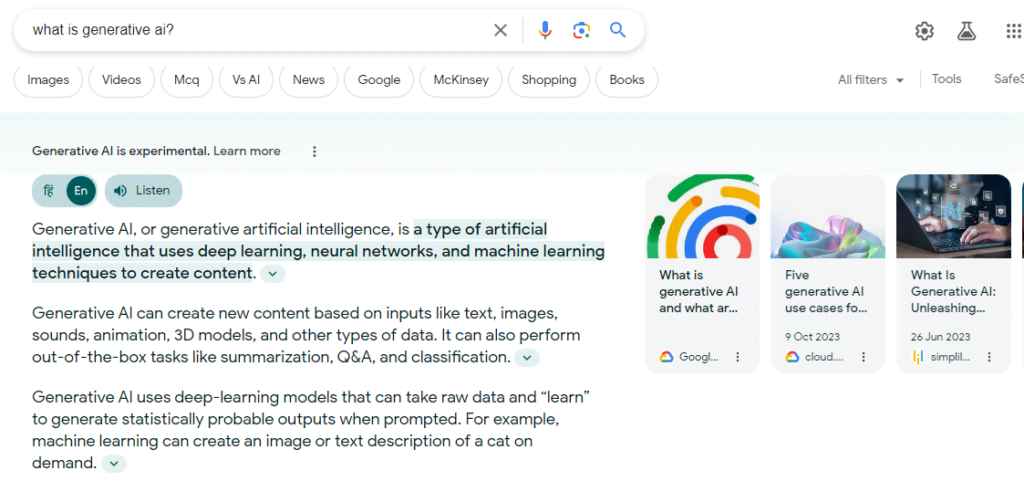
Lastly, database structure uses a database to store and organize content. This structure is often used for websites with a lot of dynamic content, such as blogging websites or news websites. Example: Economic Times and Medium
In a nutshell, these are the 4 types of basic structure of the website with the idea of “What is the best SEO structure for a website?” However, the Hierarchy Structure is the best, but it also depends on the size and complexity of your website, as well as your target audience.
It’s up to you what structure you want to choose. Make sure this structure is easy for search engines to crawl, has stronger link flow, and is well-organized for user-friendly navigation.
How to Plan a Better Website Structure for SEO?
Finally, we are here! After learning about the structure of a webpage, here are some key steps on how to optimize your site structure for maximum SEO impact.
Establish a Powerful Website Hierarchy
Firstly, you need to visualize how your website content naturally fits together. For example, you chose a hierarchy structure that showcases the homepage branched into main categories and then subcategories attached to the main category.
Meanwhile, make sure to aim for users to find the pages they are looking for in a maximum of 2–3 clicks.
Organize your URLs with a Clear Structure
Always remember that your URLs should reflect the hierarchy of your website. Try to include relevant keywords in your URLs to help search engines understand the content of the web page.
For example: theexpertcommunity.com/website-structure-for-seo
In addition, keep URLs descriptive and concise, avoiding unnecessary parameters or characters.
Plan your Navigation for User-Friendliness
The third step; your navigation menu should be clear and easy to understand, mirroring the hierarchy you established earlier. Also, use clear and concise labels for your categories and subcategories.
Thus, consider using a mega menu (drop-down menu) for complex websites, but ensure it remains organized and avoids overwhelming users.
Incorporate Breadcrumbs for Better Navigation
Breadcrumbs are navigational elements that show the user their location within the website’s structure. On the other hand, they typically appear as a trail of links at the top of the page, leading users back to the homepage through the hierarchy.
In context, breadcrumbs improve user experience and help search engines understand the structure of your web pages.
Use Internal Linking Strategically
You must know that internal links connect relevant pages on your website. And, when internal links are strategically placed, they help search engines understand the relationships between your pages and distribute authority throughout your site.
So, always link to high-quality content from relevant pages and use descriptive anchor text for your links.
Create and Submit an XML Sitemap
An XML sitemap is a file that lists all the important pages on your website and their relationships. When submitting your sitemap to search engines, it helps users discover and index your content more efficiently.
Therefore, many website platforms can automatically generate an XML sitemap for you.
Use a Consistent Website Design
Last but not least, a consistent design across your website improves user experience and makes it easier for users to navigate. This includes using a consistent layout, color scheme, and fonts throughout your website.
Bottom Line!
If you are struggling to achieve digital success, a clear site structure design helps get rid of such a situation. Remember, user experience and search engine optimization are impacted when the website structure is not clear and concise.
The above-mentioned tips and tricks can help you design the website structure to maximize SEO impact, making Google and users fall in love with your website. Connect with our professional website developers to build a Google-friendly website structure for SEO success.
Frequently Asked Questions (FAQs)
What website structure is best for SEO?
A hierarchical structure with clear categories and logical internal linking is best for SEO, as it helps search engines understand your site’s content and improves user navigation.
What are the 4 types of website structure?
The 4 types of website structure are: hierarchical, sequential, matrix, and database.
How do I structure a website for Google search?
Structure your website with a clear hierarchy, descriptive URLs, and logical internal links to help Google understand and index your content effectively.
Gone are the days of typing keywords and hopping through endless links to find the right answer. Leaving the 3rd dimension of outdated things, we’ve entered the 5th dimension of new and unknown, i.e., generative search engine powered by AI to become personalized assistants for your information needs. As we are well aware, AI is changing the way we work and increasing productivity. Similarly, SGE is here to help us find a solution with just a click.
Looking after this amazing innovation by Google, we thought to share some latest insights and other information that will help you understand this new comer perfectly.
So, stop everything you are doing right now and concentrate here so that you won’t regret it later. Let’s explore the exciting world of this transformative technology!
What is Generative AI for Search Engines?
Just think about it: you have one person who understands your business very well. He or she has an exact answer to your questions or problems. Don’t you think it will be like being on cloud 9? You will touch the sky in terms of success and growth. It will happen because you have that one assistant who understands you, your business, and your mind very well.
Similarly, a generative search engine understands your intent, reads your mind (almost!), and delivers not just relevant links but comprehensive answers, summaries, and even creative outputs tailored to your unique needs. That’s the magic of generative AI.
It uses advanced algorithms to process information, understand natural language, and generate human-quality text, images, and code. WOW! Jaw-dropped?
Yes, finally, we are in the 5th dimension, where we are experiencing the unknown, which is far better than the 3rd dimension and also effortless. Right? So, next we shall move towards: how does search generative experience—the high-tech work? Scroll down…
How Does Google’s Generative Search Engine Work?
Google’s Search Generative Experience (SGE) is a cutting-edge example. When you pose a complex question, SGE taps into massive datasets and deep learning models to:
Understand your intent: It goes beyond keywords, analyzing your question’s context and implications.
Synthesize information: It draws from various sources, weaving them into a coherent and informative answer.
Present your answer: It can deliver textual summaries, highlight key points, or even generate creative formats like poems, scripts, or musical pieces based on your query.
What are the Benefits of Generative Search Engines for Questers?
The first and foremost benefit is it saves time and energy and letting you find the right answer and rest are highlighted below…
Deeper understanding: Gain significant insights beyond simple facts, it’s due to AI’s ability to synthesize information and uncover hidden connections.
Personalized answers: No more information overload! Generative AI tailors its response to your specific needs and preferences.
Increased efficiency: Save time and effort by receiving comprehensive answers and summaries, eliminating the need to jump through multiple links.
Enhanced creativity: Unleash your imagination with AI-generated artistic outputs inspired by your queries.
The Latest Key Findings about Generative Search Engine
Google’s Search Generative Experience (SGE) is still in Alpha testing, with limited user access. However, their blog updates and public engagement provide insights into their progress and future plans. Also, other companies like Neeva and Microsoft Bing are also exploring generative search functionalities, suggesting an increasingly competitive time. So, we’ll have all generative AI search engines report in this section.
Search Engine Land’s Generative AI Pledge, this February 2024 report surveys industry experts on their views and concerns regarding generative AI in search engines. Key findings include:
As per the survey, 40% of millennials would likely switch to a generative search engine. And, 29% of users believe AI-powered search results are factual. However, transparency and user control over generated content are crucial concerns.
According to the Neeva Search 2023 User Survey: While not specifically focusing on generative aspects, this report offers insights into user preferences for advanced search features. Notably:
78% of users find Neeva’s AI-powered summaries helpful. Moreover, 63% appreciate the feature that displays key facts at the top of search results.
As per the latest survey, Google’s generative search experience may have many pros for the questers, but also it’s impacting the brands of no clicks on their website and also loosing the position on search engine.
What’s New with Generative AI?
The field is rapidly evolving, with exciting developments like:
Multimodal search: Combine text, images, and voice for even more natural and intuitive queries.
Fact-checking and bias detection: Ensure the information you receive is accurate and unbiased.
Personalization beyond demographics: Cater to individual learning styles and preferences.
What is the Future of AI in Search Engines?
According to the survey of Search Engine Land, generative AI continues to learn and grow, expect; more intuitive and human-like interaction, Receiving tailored learning resources or creative prompts based on your search, AI can help bridge the information gap, making knowledge accessible to everyone, and more.
Frequently Asked Questions (FAQs)
1. What are the four types of search engines? The four types of search engines are crawler-based search engines, directories, hybrid search engines, and metasearch engines.
2. Is ChatGPT an AI search engine? ChatGPT is not a traditional AI search engine but an AI-powered conversational assistant that generates responses based on training data rather than indexing the web like Google.
3. What is the difference between SEO and AEO? SEO (Search Engine Optimization) focuses on ranking content in search engines, while AEO (Answer Engine Optimization) optimizes content for AI-driven answer engines like ChatGPT and voice assistants.
4. Is Google a generative AI? Google has integrated generative AI features, such as AI-powered search summaries and Bard, but it is still primarily a traditional search engine.
Bottom Line!
Say goodbye to endless links! Generative search engines understand you, not just keywords. Get personalized answers, summaries, even poems! It’s the 5th dimension of search – enter now and explore the unknown! For more insights like this, you can hop to our other insights or blog posts and gain knowledge about how Generative AI is changing other industries.
Artificial intelligence is transforming industries, yet AI adoption is not just about technology—it’s about people. Employees often resist change due to fear of job loss, lack of understanding, or uncertainty about how AI will impact their roles. The secret to overcoming this resistance? Emotional intelligence. By addressing employee emotions and applying a culture of trust, businesses can accelerate AI adoption and create a workforce that embraces innovation.
Why Do Employees Resist AI?
Many believe AI will replace them rather than assist them.
AI can seem complex and intimidating.
Employees may worry about data privacy and AI-driven decision-making.
Change can be uncomfortable, and employees may prefer familiar processes.
6 Emotional Strategies to Accelerate AI Adoption
Let’s uncover why AI adoption is a game-changer, not a risk. Using AI can drive innovation, boost efficiency, and open doors to limitless possibilities! Here’s how firms can make their employers be a cold mind about artificial intelligence.
1. Communicate AI as a Partner, Not a Threat
Employees fear that AI will take their jobs. The truth? AI enhances human capabilities. For example, in healthcare, AI analyzes data to assist doctors in diagnosing diseases faster. Instead of replacing doctors, it improves decision-making. Businesses must highlight these benefits to alleviate fear and build trust.
2. Involve Employees in AI Implementation
No one likes having change forced upon them. Engage employees from the start by asking for their feedback, conducting AI training sessions, and allowing them to test AI-driven tools. When AI is introduced collaboratively, employees feel valued and more likely to embrace the change.
3. Address Ethical Concerns and Data Privacy
AI can feel intrusive if employees don’t understand how their data is used. Companies like Google and Microsoft prioritize AI transparency by implementing ethical guidelines. Businesses should ensure AI models are explainable, fair, and aligned with employee concerns about security and data privacy.
4. Provide Continuous Learning Opportunities
A workforce that understands AI is more likely to embrace it. Offering hands-on training, AI certification programs, and upskilling opportunities will help employees feel confident rather than threatened. Companies like Amazon and IBM provide AI training programs to reskill employees for AI-integrated roles.
5. Showcase AI Success Stories
People trust what they can see. If AI has helped improve productivity, increase revenue, or enhance customer experience, share these success stories. Highlight real-life examples, such as AI-powered automation reducing administrative workloads, allowing employees to focus on strategic tasks.
Introducing AI doesn’t have to be an all-or-nothing change. Start small—implement AI tools in areas like customer service or data entry and track improvements. Acknowledging these early wins helps employees see AI as a positive force rather than an intimidating disruption.
The Future of AI in Business: What’s Next?
AI is here to stay, and companies that successfully integrate AI into their operations will have a competitive edge. Businesses that use AI in retail, customer service, marketing, and finance are already seeing increased efficiency and better decision-making. The key to success? A workforce that sees AI as an opportunity, not a threat.
AI adoption isn’t just a technical shift—it’s an emotional journey. By addressing employee concerns, providing education, and fostering a culture of trust, businesses can ensure AI is not just accepted but embraced.
To learn more about artificial intelligence and other innovations, explore our insightful resources curated by our experts.
Frequently Asked Questions (FAQs)
How can I accelerate my AI adoption?
Start by educating employees, involving them in AI implementation, and providing hands-on training.
How many people use AI for work?
The majority of American workers (63%) report little to no use of AI in their jobs. Only 16% incorporate AI into some aspects of their work, with just 2% relying on it for most or all tasks. Meanwhile, 17% of workers remain unaware of AI’s presence in the workplace. Source
Is AI replacing jobs or creating new opportunities?
While AI automates repetitive tasks, it also creates new roles in AI management, data science, and ethical AI oversight.
What industries benefit most from AI adoption?
Sectors like healthcare, finance, marketing, and manufacturing use AI for automation, efficiency, and data-driven insights.
Small businesses are the backbone of the economy. But with great opportunity comes great responsibility, especially regarding cybersecurity best practices for small businesses. Data breaches can be destructive, leading to financial losses, reputational damage, and even legal trouble.
The good news is? We’ve penned this guide to help you in the most needed time. Let’s explore the best cybersecurity practices for small businesses, empowering you to create a robust defense against cyber threats.
Why Cyber Security Solutions Matters for Small Businesses?
Think you’re too small for hackers to target? Think again. Small businesses are often seen as easier targets due to a perceived lack of sophisticated security measures. Hackers can steal valuable customer data, financial information, and intellectual property, crippling your operations.
Here’s a breakdown of the consequences cyberattacks can have on your business:
Financial Loss: Recovering from a data breach can be expensive, involving IT remediation, legal fees, and customer compensation.
Reputational Damage: A security breach can erode customer trust, leading to decreased sales and brand loyalty.
Operational Disruption: Cyberattacks can disrupt your daily operations, hindering productivity and customer service.
Legal Issues: Depending on the nature of the data stolen, you might face legal repercussions for failing to protect customer information adequately.
Essential Best Cybersecurity Practices for Small Businesses
Now that we understand the importance of cybersecurity for small businesses, let’s delve into the practical steps you can take to safeguard your business.
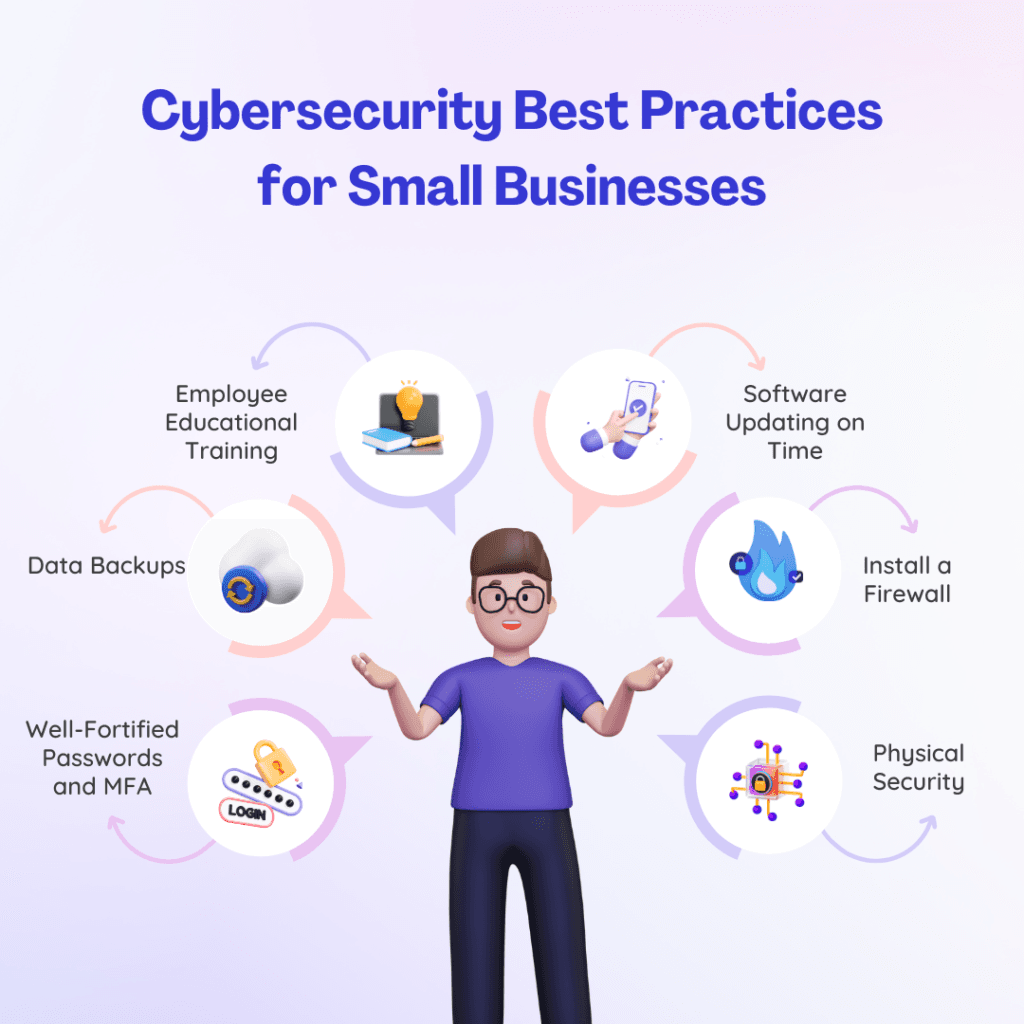
1. Educate Your Employees: Your First Line of Defense
Employees are often the entry point for cyberattacks. Phishing emails, malware-laden websites, and social engineering tactics can trick even the most conscientious workers.
Conduct Regular Security Awareness Training: Train your staff on cybersecurity fundamentals like identifying phishing attempts, creating strong passwords, and reporting suspicious activity.
Simulate Phishing Attacks: Regularly send simulated phishing emails to test your employees’ awareness and preparedness. This helps identify knowledge gaps and allows you to provide targeted training.
Develop a Culture of Security: Foster a company culture where security is valued. Encourage open communication and empower employees to report suspicious activity without fear of reprisal.
2. Strong Passwords and Multi-Factor Authentication (MFA): The Gatekeepers
Weak passwords are like leaving your front door wide open. Here’s how to create a strong password fortress:
Enforce a Password Policy: Implement a policy requiring strong passwords with at least 12 characters, and a mix of upper and lowercase letters, numbers, and symbols.
Unique Passwords for Each Account: Discourage password reuse across different platforms. Consider a password manager to help your employees generate and store unique complex passwords.
Multi-Factor Authentication (MFA):MFA adds an extra layer of security by requiring a second verification step, like a code from your phone when logging into accounts.
3. Software Updates: Patching the Holes
Software vulnerabilities are common entry points for cyberattacks. Here’s how to stay patched and protected:
Automated Updates: Enable automatic updates for operating systems, applications, and security software to ensure you have the latest security patches.
Regular Scans: Schedule regular vulnerability scans to identify and address weaknesses in your systems.
4. Data Backups: Your Safety Net
Losing all your critical business data in a cyberattack is the biggest loss you can face. And, backups are your safety net:
Regular Backups: Implement a consistent backup schedule for your data, storing backups securely offsite or in the cloud.
Test Your Backups: Regularly test your backups to ensure they are complete and functional.
5. Secure Your Network: The Foundation of Defense
Your network is the backbone of your business. Here’s how to fortify it:
Firewalls: A firewall acts as a security barrier, filtering incoming and outgoing traffic and blocking unauthorized access.
Wi-Fi Security: Use strong WPA2 encryption for your Wi-Fi network and change the default password regularly. Consider separate guest Wi-Fi for visitors.
Limit User Access: Implement a policy of least privilege, granting users access only to the data and applications they need to perform their jobs.
6. Physical Security: Don’t Forget the Basics
The other best cybersecurity practice for small businesses is physical security. Cybersecurity isn’t just about digital threats. Here are some physical security measures to consider:
Physical Security: Don’t forget about physical security measures like locking down servers and workstations when not in use.
Mobile Device Security: With the rise of mobile workforces, implement policies for securing mobile devices and company data accessed on these devices.
Third-Party Risk Management: Assess the cybersecurity practices for small businesses of any third-party vendors you work with.
Top Cyber Security Solutions for Small Business
While implementing these best cybersecurity practices for small businesses will significantly enhance your security posture, consider managed cybersecurity solutions for an extra layer of protection. These cyber security solutions for small businesses can include:
Managed Detection and Response (MDR): MDR providers continuous monitoring and real-time threat detection to identify and respond to cyberattacks quickly.
Security Information and Event Management (SIEM):SIEM tools aggregate data from your various security systems, providing a holistic view of potential threats.
Cybersecurity is an ongoing process, not a one-time fix. By implementing these best cybersecurity practices for small businesses, you can significantly reduce your risk of a cyberattack and ensure the long-term success of your business.
Therefore, if you still feel it’s hard for you and your employees to it all alone, Connect with us for comprehensive cyber security solutions for small businesses. We’ll help you implement these best practices and safeguard your company. Let’s build your digital defense system together!
Frequently Asked Questions (FAQs)
What are the best practices for data security in small businesses? Small businesses should implement strong passwords, enable multi-factor authentication, regularly update software, train employees on security awareness, and use encryption to protect sensitive data.
What are the 5 C’s of cybersecurity? The 5 C’s of cybersecurity are Change, Compliance, Cost, Continuity, and Coverage, which help businesses address risks, ensure regulatory adherence, manage expenses, maintain operations, and secure assets.
What are the 5 best methods used for cybersecurity? The five best cybersecurity methods include firewalls, encryption, multi-factor authentication, regular security updates, and employee training to safeguard networks, data, and systems from cyber threats.
This is the AI generation and staying competitive requires more than just offering quality products and excellent customer service. Retailers must leverage cutting-edge technologies to adapt to changing consumer preferences, optimize operations, and drive growth. One such technology that is revolutionizing the retail industry is artificial intelligence (AI).
In this blog post, we’ll explore how AI is reshaping the retail industry and the transformative impact it’s having on businesses worldwide.
What is Artificial Intelligence (AI) in Retail Industry?
Artificial intelligence, or AI, refers to the simulation of human intelligence in machines programmed to think and learn like humans. In the retail sector, AI technologies are being deployed to analyze vast amounts of data, automate processes, and deliver personalized experiences to customers.
What is the Current Transformation that the Retail Industry is up to?
The retail industry is undergoing significant transformation, driven by factors such as digitalization, changing consumer behaviors, and increased competition. Traditional brick-and-mortar retailers are facing challenges from e-commerce giants, and the COVID-19 pandemic has accelerated the shift to online shopping.
In this environment, retailers are turning to AI to gain a competitive edge and meet the evolving needs of consumers.
What are the Applications of AI in Retail?
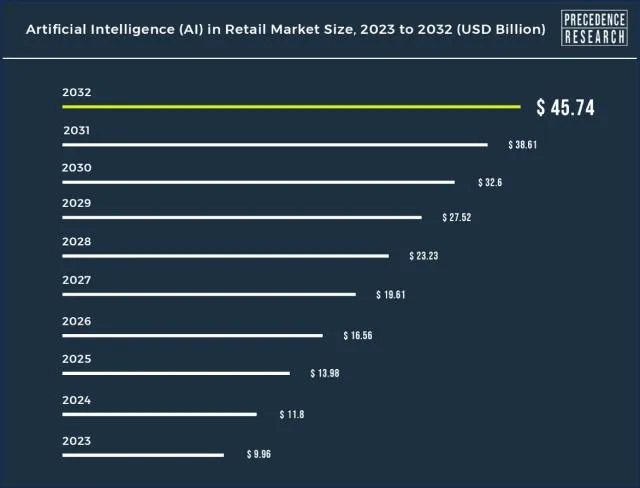
According to Precedence Research, the AI market in retail is set to grow a lot, reaching about USD 45.74 billion by 2032. Each year from 2023 to 2032, it’s expected to grow by around 18.45%. This means stores will use more AI to make shopping better and their businesses run smoother. It’s a big opportunity for retailers like you to improve how they serve customers and manage their operations.
Therefore, AI is being applied across various aspects of retail operations, including:
Personalized Shopping Experiences: AI-powered recommendation engines analyze customer data to offer personalized product recommendations, driving higher conversion rates and customer satisfaction.
Inventory Management: AI algorithms optimize inventory levels, predict demand, and prevent stockouts by analyzing historical sales data and external factors such as weather patterns and economic trends.
Supply Chain Optimization: AI streamlines supply chain operations, improves logistics efficiency, and reduces costs by predicting demand, optimizing routes, and automating warehouse management processes.
Customer Service: AI chatbots and virtual assistants provide 24/7 customer support, answering inquiries, resolving issues, and enhancing the overall shopping experience.
Marketing and Sales: AI-driven analytics enable retailers to segment customers, target marketing campaigns, and optimize pricing strategies for improved sales performance.
What are the Benefits of AI in Retail?
The adoption of AI technologies in retail offers numerous benefits, including:
Increased operational efficiency
Cost savings through automation and optimization
Enhanced customer satisfaction and loyalty
Competitive advantage in a crowded marketplace
Challenges and Considerations
While the potential benefits of AI in retail are significant, there are also challenges and considerations that retailers must address, including data privacy concerns, integration complexities, and the need for skilled talent to manage AI systems effectively.
Best Examples of Big Brands Utilizing AI to Transform the Industry
Numerous retailers have successfully implemented AI solutions and achieved tangible results. Here are a examples…
Amazon- Gen AI Assistant “Rufus”
Amazon relies heavily on its recommendation engine, which plays a crucial role in driving sales. More than a third of its revenue, around 35%, comes from this engine.
Every day, Amazon’s AI algorithms sift through billions of data points to provide personalized recommendations to users. Impressively, these recommendations influence about 9 out of 10 product purchases on the platform.
Also, via generative AI shopping assistant; “Rufus”, named by Amazon helps shoppers in conversational shopping experience.
Walmart- AI-Powered “Inventory System”
While, Walmart uses AI to upgrade its supply chain and manage inventory better. This helps them ensure products are stocked efficiently, reducing costs and improving the shopping experience of their customers.
Myntra- AI-Powered Chatbot “Maya”
Moreover, Myntra, following the trend of leveraging AI, has introduced a chatbot named “Maya” feature aimed at enhancing the shopping experience for its users. This chatbot simplifies the search process by guiding customers through a curated selection of products based on their preferences.
By narrowing down choices within a limited collection recommended by the chatbot, Myntra aims to streamline the shopping journey and make it more efficient for users to find what they’re looking for.
This innovative use of AI underscores Myntra’s commitment to providing personalized and convenient solutions for its customers.
In the future, AI will make shopping even better. Stores will know exactly what you like and make recommendations just for you. This means finding what you want will be faster and easier.
Behind the scenes, AI will help stores manage their stock better, so they always have what you need. Basically, AI will make shopping more fun and convenient for everyone.
End Note!
Shopping made smarter, easier, and more fun, all thanks to AI. It’s like having your customers own personal shopper who knows exactly what they want before you do. With AI, retailers can offer tailored experiences and keep their shelves stocked with their customers’ favorites. So get excited because the future of shopping is about to get a whole lot cooler.
And if you’re sitting back and just thinking to take an action, now is the right time before it gets too late. Don’t settle for ordinary when you can be extraordinary.
Reach out today and discover how The Expert Community can help you make waves in the world of retail with cutting-edge AI solutions.
Frequently Asked Questions (FAQs)
How is artificial intelligence (AI) reshaping the retail industry? AI is transforming the retail industry by enhancing customer experiences, optimizing inventory management, and enabling personalized marketing through data-driven insights.
How is artificial intelligence reshaping business? AI is reshaping business by automating processes, improving decision-making with predictive analytics, and boosting efficiency through advanced data processing.
What are the positive effects of artificial intelligence in retailing? AI positively impacts retailing by streamlining operations, reducing costs, and delivering tailored shopping experiences that increase customer satisfaction and loyalty.
How is AI used in customer service in retail? AI enhances customer service in retail by powering chatbots, providing instant support, and offering personalized product recommendations.
What role does AI play in retail inventory management? AI optimizes inventory management by predicting demand, preventing stockouts, and reducing overstock through real-time data analysis.
How does AI improve marketing strategies in retail? AI boosts marketing strategies by analyzing consumer behavior, enabling targeted campaigns, and enhancing customer segmentation.
What are the benefits of AI-powered pricing strategies in retail? AI helps retailers implement dynamic pricing by analyzing market trends, competitor prices, and customer demand in real time.
How does AI enhance fraud detection in retail? AI strengthens fraud detection by identifying suspicious patterns, monitoring transactions, and preventing fraudulent activities.
We use cookies on our website to give you the most relevant experience by remembering your preferences and repeat visits. By clicking “Accept”, you consent to the use of ALL the cookies.
This website uses cookies to improve your experience while you navigate through the website. Out of these, the cookies that are categorized as necessary are stored on your browser as they are essential for the working of basic functionalities of the website. We also use third-party cookies that help us analyze and understand how you use this website. These cookies will be stored in your browser only with your consent. You also have the option to opt-out of these cookies. But opting out of some of these cookies may affect your browsing experience.
Necessary cookies are absolutely essential for the website to function properly. These cookies ensure basic functionalities and security features of the website, anonymously.
Cookie
Duration
Description
cookielawinfo-checbox-analytics
11 months
This cookie is set by GDPR Cookie Consent plugin. The cookie is used to store the user consent for the cookies in the category "Analytics".
cookielawinfo-checbox-functional
11 months
The cookie is set by GDPR cookie consent to record the user consent for the cookies in the category "Functional".
cookielawinfo-checbox-others
11 months
This cookie is set by GDPR Cookie Consent plugin. The cookie is used to store the user consent for the cookies in the category "Other.
cookielawinfo-checkbox-necessary
11 months
This cookie is set by GDPR Cookie Consent plugin. The cookies is used to store the user consent for the cookies in the category "Necessary".
cookielawinfo-checkbox-performance
11 months
This cookie is set by GDPR Cookie Consent plugin. The cookie is used to store the user consent for the cookies in the category "Performance".
viewed_cookie_policy
11 months
The cookie is set by the GDPR Cookie Consent plugin and is used to store whether or not user has consented to the use of cookies. It does not store any personal data.
Functional cookies help to perform certain functionalities like sharing the content of the website on social media platforms, collect feedbacks, and other third-party features.
Performance cookies are used to understand and analyze the key performance indexes of the website which helps in delivering a better user experience for the visitors.
Analytical cookies are used to understand how visitors interact with the website. These cookies help provide information on metrics the number of visitors, bounce rate, traffic source, etc.
Advertisement cookies are used to provide visitors with relevant ads and marketing campaigns. These cookies track visitors across websites and collect information to provide customized ads.