Predictive analytics: the trends and applications that are paying off
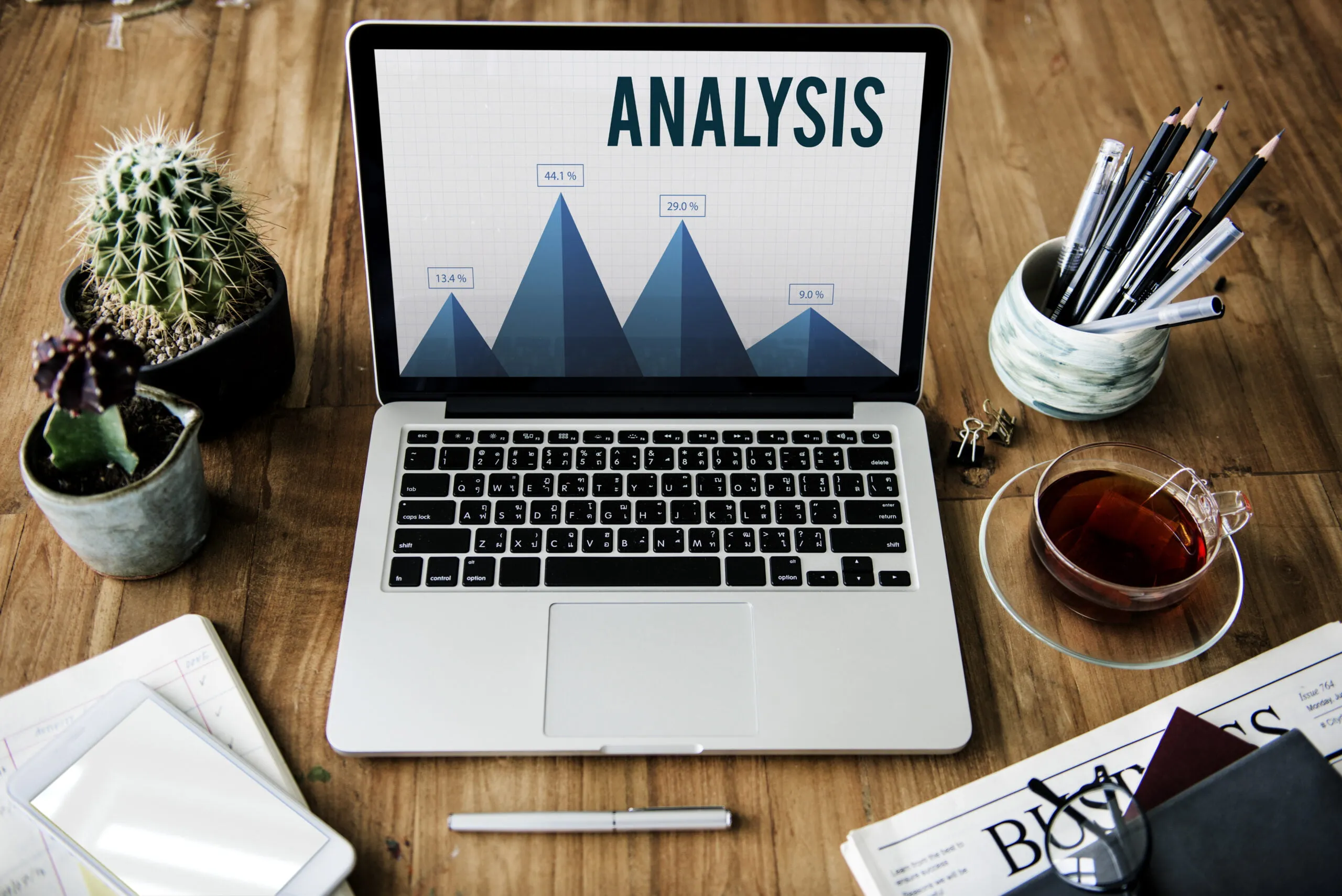
Most companies already have the raw material for predictive analytics. It sits in the CRM, the accounting system and the order history. What they usually don’t have is a habit of asking that history a forward-looking question: who is likely to leave, what will we sell in March, which of these invoices will be paid late?
That is all predictive analytics is. You take what has already happened, find the patterns that tend to come before an outcome, and use them to estimate the odds of that outcome next time. Good forecasts don’t promise certainty. They give you a better guess than the one you would make on instinct, early enough to act on it.
We first wrote this guide in 2024. A lot has moved since then, mostly in how easy it has become to get started, so we’ve rewritten it.
What has changed since 2024
Forecasting now comes built into the tools you already pay for
Two years ago, a demand forecast or a churn score usually meant a separate project with a data scientist. Today most mainstream CRMs, ERPs and BI tools ship with forecasting features switched off by default. For many first use cases the question is no longer “can we build this?” but “is our data good enough to switch it on, and will anyone look at the result?”
Pre-trained forecasting models work on smaller datasets
In 2024 both Google Research and Amazon released forecasting models trained in advance on huge numbers of time series, in the same way language models are trained on text. You can point them at your own sales history and get a reasonable forecast without training a model from scratch. For a company with a few years of data rather than a few decades, that matters.
You can ask the numbers questions in plain language
Generative AI hasn’t replaced forecasting models, but it has changed who can use them. A sales director can now ask “which accounts are most likely to churn this quarter, and why?” and get an answer drawn from the model, rather than waiting for an analyst to build a report. That only helps if the model underneath is sound, which brings us back to data.
Regulators are paying attention
Where a prediction affects people directly, the rules have tightened. Under the EU AI Act, systems that assess the creditworthiness of individuals are classed as high-risk, with requirements for documentation, human oversight and testing for bias. If your model decides who gets credit, a discount or an appointment, plan for explaining how it works.
Where predictive analytics is earning its keep
The examples below are well documented and still hold up. What they share is a specific decision, made often, where a slightly better guess is worth real money.
Keeping the right stock: retail
Retailers forecast demand by store and by product, using sales history alongside weather, holidays and local events. Walmart has written about how its forecasting system plans stock for peak periods. A smaller retailer doesn’t need Walmart’s scale to benefit: even a weekly forecast for its top 200 products can cut both stockouts and the cash tied up in slow lines.
Fixing machines before they break: manufacturing and aviation
Sensors on equipment report temperature, vibration and pressure. A model learns which readings tend to come before a failure, so maintenance can be scheduled before the breakdown rather than after it. GE has applied this to jet engines, where an unplanned failure is both dangerous and very expensive. The same idea works on a bottling line or a delivery fleet.
Deciding who gets credit: financial services
Credit scoring is one of the oldest uses of predictive models. FICO scores estimate the likelihood of default from payment history, how much available credit is in use and the length of credit history. Lenders now add more data points, which improves accuracy but raises the fairness and explainability questions mentioned above.
Catching patients at risk: healthcare
Hospitals use predictive models to flag patients at risk of readmission or of a condition getting worse. Mayo Clinic researchers, for example, used health record data to predict which patients were likely to need more than metformin to manage diabetes, so care could be adjusted earlier. In healthcare the prediction supports a clinician’s judgement; it doesn’t replace it.
Showing people what they’re likely to want: media and e-commerce
Recommendation engines are prediction in a different form: the odds that this person will watch, read or buy this item. Netflix publishes its research on recommendations openly. For most businesses the practical version is smaller: the next product to suggest in an email, or the accounts a salesperson should call this week.
Why many predictive projects stall
When we look at forecasting projects that didn’t deliver, the model is rarely the problem. The usual causes are more ordinary:
- The data disagrees with itself. Customers exist twice under different names, dates are entered in three formats, and the CRM and the finance system don’t agree on revenue. A model trained on that learns the mess.
- Nobody owns the decision. A churn score that sits in a dashboard changes nothing. Someone has to be responsible for calling the at-risk customers, and their manager has to ask whether they did.
- There is no baseline. If you don’t know how accurate today’s spreadsheet forecast is, you can’t show that the new one is better.
- The forecast lives in the wrong place. People act on what they see in the tools they already use. A prediction that needs a separate login tends to be ignored.
How to start without a data team
You don’t need a large programme. A first project that works is worth more than a roadmap with twelve use cases on it.
- Pick one decision you make often. Weekly stock orders, which leads sales should call first, which invoices to chase. Frequent decisions give you feedback quickly.
- Check you have the history. Two years of reasonably consistent data is a good rule of thumb for anything seasonal. If the data is poor, fix that first; it pays off in every report you run, not just this one.
- Measure what you do today. Record how accurate the current method is, whether that’s a spreadsheet or someone’s experience. That is the number to beat.
- Start simple. A forecasting feature in your existing tools, or a straightforward model, is often good enough. Add complexity only when the simple version has proved its worth.
- Put the result where people work and agree who acts on it. Then review it after a month: did the forecast beat the baseline, and did anyone change what they did?
If the answer to both is yes, you have something worth extending. If you’d like a view of how ready your data and systems are before you start, the AI Readiness Index covers both in about six minutes. And if your reports already disagree with each other, that’s the place to begin: it’s the work we describe under business intelligence and analytics.
Need help putting your business data to work?
Connect with pre-vetted AI, machine learning and data analytics experts on TEC to build forecasting models that deliver real ROI.
Hire Data & AI ExpertsFrequently Asked Questions
What is the difference between predictive analytics and ordinary reporting?
How much data do you need for predictive analytics?
Do we need to hire a data scientist?
Which industries use predictive analytics most?
Expert contributor sharing insights on AI, talent, and the future of work.